
Kelly Semrad on Key Issues in Orange County
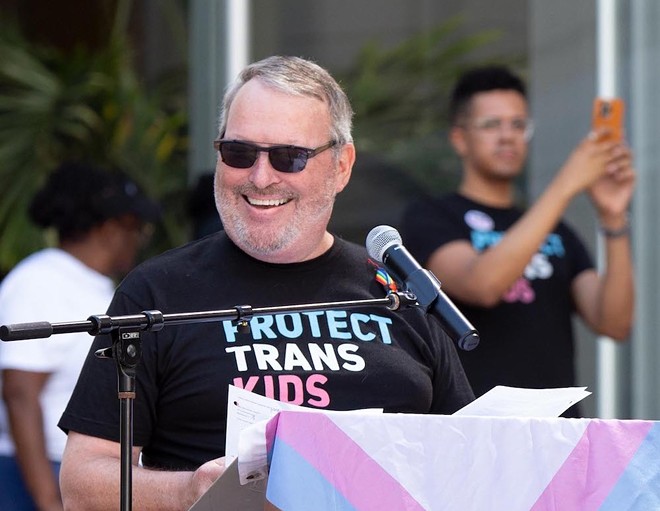
Orlando Weekly: Orlando Mayor Buddy Dyer’s PAC gifts campaign cash to developer-friendly Republicans running for Orange County Commission
With several contentious races on the ballot for Orange County voters this year, Orlando Mayor Buddy Dyer, the region’s most high-profile Democrat, appears to be throwing financial support behind two Republicans gunning for local office, including a challenger to an incumbent Democrat.
Earlier this year, Dyer publicly came out in support of developer Steve Leary, a Republican and former Winter Park mayor who’s vying for the open District 5 seat on the Orange County Commission that will soon be vacated by term-limited Commissioner Emily Bonilla. Facing off against Leary for the seat is Dr. Kelly Semrad, a hospitality and tourism studies professor at the University of Central Florida, an environmental activist and a Democrat.
Dyer has publicly endorsed Leary — whom he has described as a “thoughtful” and an “effective leader” — and appears in Leary’s campaign materials. He’s also donated several thousands of dollars to Leary’s political action committee.
Outside of the very public eye, however, newly posted campaign finance records indicate Dyer also appears to be working with Republicans to boot from office incumbent Orange County Commissioner Nicole Wilson, who is being challenged by anti-abortion Republican Austin Arthur from the right. Arthur, like Leary, has gained the backing of powerful players in the developer, hospitality and tourism industries that could benefit from gaining new allies on the County Commission.
Rachael Kobb, a political strategist and former campaign manager for Dyer, told Orlando Weekly that Dyer has only endorsed Leary. She didn’t mention Arthur, who has alleged a “barrage of misinformation” from his opposition. Campaign finance records, however, seem to offer a different tale.
Records through the state Division of Elections office show the Orlando PAC, a political committee affiliated with Dyer, contributed $10,000 on Oct. 24 to Florida Right Solutions, a political committee controlled by longtime GOP consultant Marc Reichelderfer.
While it’s unclear what exactly the money was for (Kobb didn’t respond to a request for an explanation), records show a separate but similarly named political committee, Central Florida Solutions — run by GOP consultant David Johnson — contributed $10,000 to Citizens for Common Sense Solutions, a committee affiliated with Orange County Commission candidate Austin Arthur, on the same day.
While Arthur’s name doesn’t appear on any of the public documents associated with Citizens for Common Sense Solutions, the committee is chaired by Jose Virella, a videographer hired to do work for Arthur’s campaign. It has also made monthly payments to Arthur’s campaign manager, Tracy Main, since last August.
Johnson and Reichelderfer, the GOP consultants, have worked together in the past. Neither responded to requests for comment.
Arthur, a marketing executive and gym owner from Winter Garden, is a Republican with documented anti-abortion views who is challenging incumbent Nicole Wilson, a Democrat from Windermere, for her nonpartisan District 1 Orange County Commission seat. Wilson, an environmental lawyer who’s made enemies within developer circles for her “smart growth” approach to new development, beat Arthur in the Aug. 20 primary election by literally just a couple of votes, sending the pair to a rematch on Nov. 5. Although the race is officially nonpartisan, the district leans slightly Republican — and one candidate is a Democrat, while the other is a Republican….
….It’s unclear why Dyer, who has described himself in the past as “100% pro-choice,” would throw money at Arthur’s campaign. Wilson, however, has some ideas. While previously unaware of the recent contribution from Dyer’s PAC, Wilson admitted she and Dyer haven’t seen eye-to-eye on certain issues, like her opposition to a proposed toll road through environmentally sensitive land and her recent opposition to a massive annexation plan that Dyer and city officials supported.
Wilson opposed the annexation in her capacity as an elected county commissioner, while Semrad — the District 5 candidate facing off against Dyer’s preferred candidate, Leary — opposed it in her role as an activist with the group Save Orange County.
The controversial plan proposed to annex more than 52,000 acres of Deseret Ranch land in unincorporated Orange County to the city. Wilson, concerned about sprawl, opposed the plan on the grounds that the city’s environmental protections are weaker than the county’s. Critics of the proposal described it as a “massive land grab” supported by developers with cozy relationships to the city.

Seeking Rents: ‘Ghost candidate’ group funds campaign to oust Orange County commissioner
Some big-dollar donors are desperate to sway this year’s local elections in Orange County, where half of the county commission is up for grabs.
Last month, right around the time early voting began for Florida’s Aug. 20 primary elections, voters in west Orange County were sent ugly mailers meant to trick people into thinking that Nicole Wilson, the county commissioner for the area, had made racist remarks.
The eleventh-hour attack ads came from an innocuously named political committee that had been set up by allies of Austin Arthur, a marketing executive running against Wilson for Orange County’s District 1 commission seat.
And they were sent just as the pro-Arthur political committee got a $50,000 cash infusion from a controversial source: A dark-money nonprofit in Tallahassee that was at the center of Florida’s 2020 “ghost candidate” scandal.
The $50,000 gift is an example of how even some candidates in local races in Florida are flouting traditional campaign fundraising rules that were supposed to limit the influence of money in politics.
But it also reveals how desperate some big-dollar donors are to sway this year’s local elections in Orange County, where three of six county commission seats are on the ballot this fall — in races in which there are clear differences between all the candidates on key issues like taxes and development…
…Much like Austin Arthur, records show that District 5 candidate Steve Leary has tapped tourism and development donors to fund his political committee, which Leary named, “Neighbors for a Sensible Orange County.”
The biggest donor is Universal Orlando, which has given $7,500.
But Leary’s group has also received $4,000 from a fundraising committee controlled by Orlando Mayor Buddy Dyer, who is helping development giant Tavistock move forward with plans to build homes across a vast swath of east Orange County. And a company controlled by Tavistock itself has given Leary’s committee another $2,500.
Records show Leary has used his political committee to pay for polling and text-message adverting so far, as he tries to catch up with Semrad, the university professor who finished in first place in the August primary despite raising far less money overall.
In fact, Wilson and Semrad are the only two of the six Orange County commission candidates who are not relying on political committees to get around donation caps.
Seeking Rents: Real-estate lobbyists try to tilt election with deceptive ads
Lobbyists for Realtors tried to kill a plan to slow suburban sprawl in orange County. Then the pretended to support that plan in campaign ads for a candidate they want to win a key local race.
Imagine opening your mailbox to find a mailer from the National Rifle Association — touting a candidate claiming to support gun control. That’s a bit what it’s been like in parts of Orange County, where some residents recently received mail pieces promoting Steve Leary, a candidate running in a potentially pendulum-swinging race for the local county commission.
The campaign ads, which arrived just before last month’s primary election and helped Leary advance to the November general election, heaped praise on Leary for supporting for one of the most contentious issues in this year’s local elections: A proposed “rural boundary” that would wall off some of Orange County’s undeveloped land from further suburban sprawl.
“It’s high time to…protect our rural boundary,” one mailer declared. “Steve knows how to get us there!” Protecting the rural boundary, another piece promised, is Leary’s top priory. There’s just one catch: These ads were paid for by a deep-pocketed special interest group that represents Realtors — who have lobbied hard against a rural boundary in Orange County.
Just a few months ago, the head of the local Realtors association publicly warned county leaders that the organization — one of the most influential lobbies in local politics — was “strongly” opposed to a rural boundary. “This proposal may well diminish and/or remove individual property rights…” Cliff Long, the president of the Orlando Regional Realtor Association, wrote in an April 15 a letter sent to Orange County’s mayor and all six current county commissioners, among others…
…That’s not the end of the deception, either. Leary’s chief opponent in the race for Orange County’s District 5 commission seat — the candidate he now faces one-on-one in the general election — is Kelly Semrad. She’s the environmental activist who has personally led the campaign to create a rural boundary.
Meanwhile, Leary, a former mayor of Winter Park, has been vague about whether he fully supports the proposal, which consists of two separate-but-related charter amendments that will also appear on the November ballot. And Leary has raised thousands of dollars from real-estate developers who have tried to block the rural boundary referendums.
In fact, the Orlando Realtors have endorsed candidates in all three county commission elections. In each race, the Realtors are backing the candidate who is less committed to the rural boundary…
…In addition to Steve Leary, the Realtors are supporting Austin Arthur, a marketing executive who opposes a key piece of the rural boundary plan — and who, like Leary, has raised thousands of dollars from developers who have lobbied against the proposal. The Realtors are also backing Linda Stewart, a state senator who voted for a developer-backed bill in Tallahassee meant to stop the referendums from happening.
Their opponents — incumbent commissioners Nicole Wilson and Mayra Uribe — both voted to put the rural boundary referendums on the ballot. Both say they will personally vote for the measures, too.
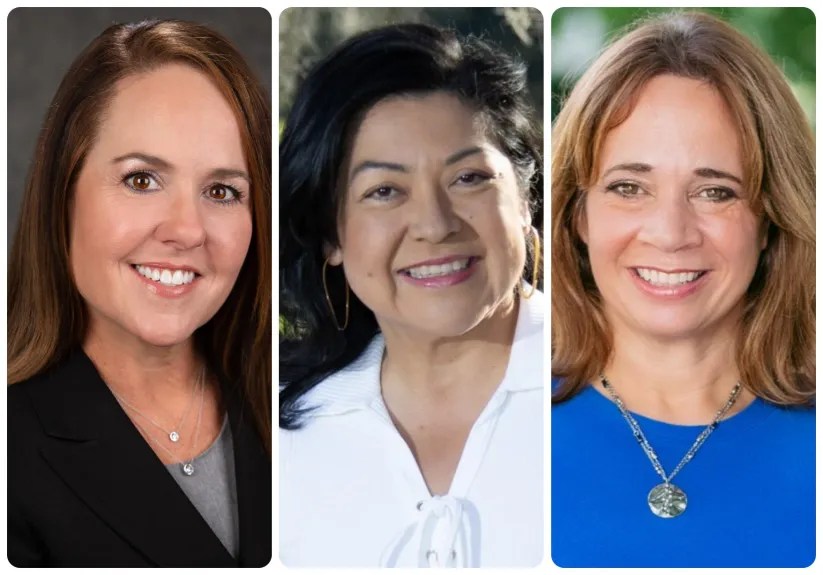
Orlando Sentinel: Endorsement: Wilson, Uribe and Semrad would be strong defenders for Orange County residents, environment
There are parts of Orange County that many visitors never see, but locals revere: The shaded beauty of state and local preserves, the thousands of acres of rolling farmland, the miles of waterfront and the wildlife that flourish there.
And there are realities in Orange County that visitors never see, but locals understand: The neighborhoods where parents pray to protect their children from drug abuse or gun violence as they work two or three jobs to keep them housed and fed. The never-ending development pressure to sprawl thousands of houses across open acres while inner-city neighborhoods rot. The line cooks and hotel maids who leave work to go sleep in their cars or line up at a local shelter while leaders lavish hundreds of millions of dollars on sports venues and a giant convention center.
Orange County is home to the self-designated “most magical place on Earth.” But outside theme-park confines, there is not enough magic to go around.
That throws November’s County Commission races into sharp contrast. Voters can choose candidates who will fight to protect a healthy balance between growth and nature, and work to defend the legions of workers who provide the backbone of Orange County’s hospitality-and-health-care based economy. Or they can hand the keys over to the well-connected, well-funded interests who are losing their patience with the attempts to claim a better future. They have thrown their weight behind candidates they expect to be more compliant — and intend to make their investment count. Voters with commission races on the ballot should expect heavy spending on campaign mailers designed to smear, distract and mislead.
Prior to the August primary, the Sentinel endorsed two incumbent commissioners — District 1’s Nicole Wilson and District 3’s Mayra Uribe — along with community activist Kelly Semrad in the District 5 race. All three have advanced to the Nov. 5 ballot, and are still the strongest options for Orange County voters.

Seeking Rents: Candidates in Orlando split over new rules to save rural land from suburban sprawl
A proposal to make it harder for developers to build on rural land has become a bright dividing line in three key races for seats on the Orange County Commission.
When voters in Orlando go to the polls this fall, they will find suburban sprawl on the ballot.
It’ll be there in the form of two referendums that would establish new protections for rural lands in Orange County, the rapidly growing region of nearly 1.5 million people that includes the city of Orlando.
But it will also be on the ballot in the form of three county commission races, where rural land protections have also become a bright dividing line between the candidates.
The divide centers on one of the two referendums, which together aim to create a strong “rural boundary” in Orange County. The measure would make it much harder for a developer to dodge new rural development limits simply by convincing some growth-hungry city to annex the land — something that cities like Orlando are often happy to do, even when it means swallowing up a vast swath of cattle pasture that is closer to the St. Johns River than it is to City Hall.
On one side are a trio of candidates who all say they support the proposed limits on municipal annexation power: Nicole Wilson, the incumbent commissioner in District 1, which covers western Orange County; Mayra Uribe, the incumbent commissioner in District 3, which takes in parts of south and east Orlando; and Kelly Semrad, a university professor running for an open seat in District 5, which spans the county’s eastern side.
The three have records to back it up. Wilson and Uribe both voted to place the measure on the November ballot and both say they will personally vote for it, too. And Semrad, a leader of the activist group Save Orange County, was one of the very first supporters of the idea.
On the other side are Austin Arthur, a marketing executive challenging Wilson in District 1; Linda Stewart, a state legislator challenging Uribe in District 3; and Steve Leary, a former Winter Park mayor squaring off with Semrad in District 5.
Arthur says he opposes the annexation measure. Stewart and Leary say they have not yet made up their minds about it.
But Arthur has also raised thousands of dollars from some of the key developers trying to stop the referendum. So has Leary. And Stewart voted in favor of a developer-backed bill in Tallahassee that was meant to block it from the ballot in the first place.
The differences here are important.
Not because of the referendum itself, which will be decided directly by Orange County voters. But because they offer a window into how these candidates are likely to vote as commissioners when they are inevitably asked to sign off on some new subdivision in a remote corner of the county — which are often among the most consequential votes commissioners ever cast.
It also mirrors a similar divide between the candidates on tourism policy — and whether Orange County leaders should fight for the right to spend local hotel taxes on projects and services that support local residents, like police, housing and transit.
Wilson, Uribe and Semrad all say they unequivocally support using hotel taxes for local needs.
Arthur, Stewart and Leary are again more circumspect — and each has also been endorsed by the tourism industry’s main lobbying group in Orlando, which pushes local politicians to spend virtually all hotel taxes on subsidies for tourism and sports businesses.

Seeking Rents: Voters in Orlando have a chance to loosen the tourism industry’s grip on taxpayer money
Three key county races in central Florida could shape whether Orlando will ever stop dumping hotel taxes into tourism and sports — and start spending the money on real needs like transit and housing.
Just a few weeks from now, voters across Florida will begin casting ballots for the November general election.
They have a bunch of big decisions to make — from a potentially close U.S. Senate race and a constitutional amendment protecting abortion rights to the fate of the Republican supermajority in Tallahassee and more Moms for Liberty school board candidates.
But there is a unique opportunity in Orlando. Voters in Orange County — a county of nearly 1.5 million people that reaches from Disney World to the St. Johns River — will decide three closely contested county commission races that will have a profound impact on the region’s future.
Nicole Wilson, an incumbent commissioner, and Austin Arthur, a marketing executive, are competing in District 1, which covers the county’s western suburbs. Mayra Uribe, another incumbent, and Linda Stewart, a term-limited state senator, are squaring off in District 3, which includes neighborhoods south and east of Orlando. And Kelly Semrad, a university professor, and Steve Leary, a former mayor of Winter Park, are vying to represent District 5, which stretches all the way from downtown to the county’s rapidly developing eastern frontier.
That’s basically half of the county commission, which is comprised of six regional commissioners and a countywide mayor. And there are clear contrasts between the candidates in all three races.
For starters, there’s an obvious partisan divide. These races pit Wilson, Uribe and Semrad, all Democrats, against Austin and Leary, who are Republicans, and Stewart, who was elected to the Florida Senate as a Democrat but once in Tallahassee voted with Republicans more often than any other Democrat in the Senate. (That’s according to a quantitative analysis of legislator voting records by The Tributary, a nonprofit newsroom in Jacksonville. If you’d prefer a few qualitative examples, see here, here, here, here, and here.)
But the differences between these three candidates go beyond basic party lines. There’s also a wide gulf — in both record and rhetoric — on two of the most important issues facing local leaders in Orlando: Tourism and sprawl.
I’ve mentioned before that I live in Orlando. It’s been my home for more than 20 years now. So I care about these particular elections a little more than most. And because of that, I’m going to spend a bit of time drilling down into these three races.
That starts today with a story exploring where these candidates stand on hotel taxes, which are an enormous source of money in Orange County — but one that local leaders have historically spent almost entirely on subsidies for the tourism and pro sports industries.
It’s one of the most brazen examples of rent-seeking in all of Florida politics. But it doesn’t have to be this way. This is money that could instead be spent helping everyday people and working families in central Florida — as it is in some other parts of the state already and in other big tourism markets around the country.
Winter Park Voice: Steve Leary taps political committee for unlimited dollars in District 5 race against Kelly Semrad
Universal Orlando, Tavistock, other land developers wrote big checks in support of the former Winter Park mayor who is facing Semrad in the November election.
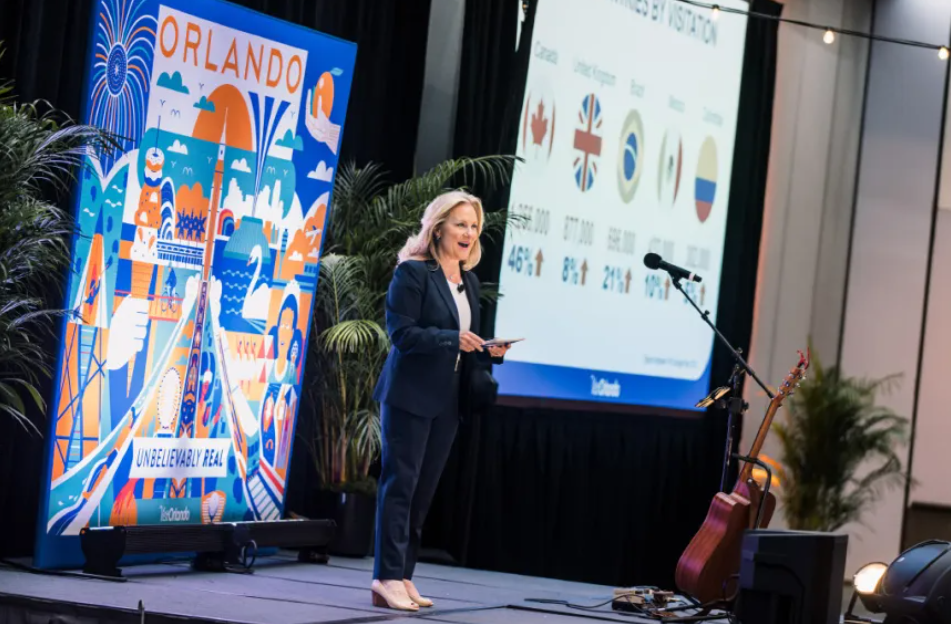
Orlando Sentinel Commentary: Red flags in Visit Orlando audit show reform is needed
Comptroller Phil Diamond released an interim audit report that raised more red flags than a Florida beach during hurricane season. Among his many concerns: More than $6 million worth of spending in 2023 wasn’t properly documented. When you’re talking about tax dollars, you should account for every bloody nickel. The agency moved $600,000 worth of interest earned off taxpayer money into a private account, even though Diamond said the county’s agreement explicitly says interest earned off public money “shall be considered public funds.”
Serious reforms are needed. Here are four:
- No tax dollars for lobbyists, period. Not under any circumstances.
- No spending on in-town propaganda.
- Total disclosure on how every public penny is spent.
- The industries that benefit from this spending should contribute one private dollar for every tax dollar they receive.
Orange County commissioners could demand all that. But historically, most have been unwilling to do so. In recent years, however, a few commissioners have started speaking up. Two of them are Nicole Wilson and Mayra Uribe — both of whom are up for reelection this year and facing serious challenges. In the third race, Kelly Semrad is also challenging the status quo, saying taxpayers deserve better.
Winter Park Voice: Steve Leary, with Buddy Dyer’s endorsement, heads to run-off from second place
The Orlando mayor and Democrat lent his political sway to the Republican former Winter Park mayor who is running in a heavily blue Orange County Commission district. But Kelly Semrad, a UCF professor and Democrat, emerged from the primary in first place.
Orlando Sentinel: Visit Orlando bends rules in spending millions in public money: audit
A new audit of Visit Orlando, conducted at the urging of Orange County commissioners, found the destination marketing agency again failed to provide details of how it spends millions in public money, engaged in lobbying activities without county permission and did not follow rules as it promised five years ago, according to a memo issued Monday by Comptroller Phil Diamond.
In the three-page missive to commissioners, Diamond listed “significant issues” identified by his auditors and questioned some of the agency’s financial practices, while also alleging Visit Orlando wrongly treats interest earned from millions in tourist-tax money as if it were privately donated.
He termed the audit an interim report which is not finished.
Visit Orlando’s private funds face less scrutiny than its public funding, which comes from Orange County’s Tourist Development Tax, or TDT. Those public funds are the overwhelming bulk of its budget; Visit Orlando’s membership dues accounted for less than 3% of the agency’s $109 million funding stream, according to its 2022 federal tax return.
Diamond pointed out that Visit Orlando, last audited by the comptroller’s office in 2019, failed to follow through on about half the recommendations that its leadership had agreed to implement at that time to comply with obligations in its contract with the county.

Orlando Sentinel: Endorsements: List of Orlando Sentinel primary candidate endorsements
Florida’s primary election is Tuesday, Aug. 20.
Here is the list of candidates the Orlando Sentinel’s editorial board is endorsing.
“We urge voters to not rely solely on our opinions in deciding how to cast a vote. Voters should check the candidates’ campaign websites and social media accounts (if they don’t have either, that should be a red flag). Ask friends and neighbors what they think,” the editorial board says. “Google the candidates and check out their campaign finances. In addition, we’ve recorded our interviews and posted them with endorsements at OrlandoSentinel.com/opinion/endorsements/.
Orange County
County Commission District 1: Nicole Wilson
County Commission District 3: Mayra Uribe
County Commission District 5: Kelly Semrad
Elections Supervisor (Democratic primary): Any votes cast in this race have been invalidated after a court decision involving a non-partisan candidate — read about it at OrlandoSentinel.com/opinion. The seat will be decided in November.

Orlando Sentinel: Letters: Two views on Orange commissioner race
Semrad defends green issues best The Sentinel’s Orange County Commission endorsements rang accurate.
It’s hard not to see District 5 hopeful Kelly Semrad as a defender of rural/wild lands and of what her electorate cares about. Or Steve Leary as the developer’s safe bet.
Leary’s $150,000 war chest donors include 48 in real estate industries; six different “Rosen” entities; outside-county funds from Houston, Palm Beach, Sarasota and Boston; obscure political committees; Central Florida Hotel and Lodging; developer lawyers and firms who’ve pushed land-use changes near the Econ River, despite outcry by affected residents.
All are fair-play donations, but of wildly different character from the receipts for Semrad, whose donors read like a cross-section of regular folks who just want their county to remain green, wildlife-friendly and livable.
It seems a choice between more paradise pave-over — thwarting residents in the name of mindless growth — or building upon the peoples’ stands taken by Emily Bonilla and Nicole Wilson: Less oligarchy with decks stacked against us, and more true representation among county commissioners.
I know former legislator Joy Goff-Marcil is also someone of integrity and intelligence who values our natural heritage and supports a rural boundary. But Semrad has championed one for some time.
With the right commission mix, Orange County could one day have an adequately funded land conservation program: imagine. There exists no “right” to rezone rural land. County commissioners decide land use. Let’s vote like Orange County’s future depends on us —because it does.
Rebecca Eagan Winter Park
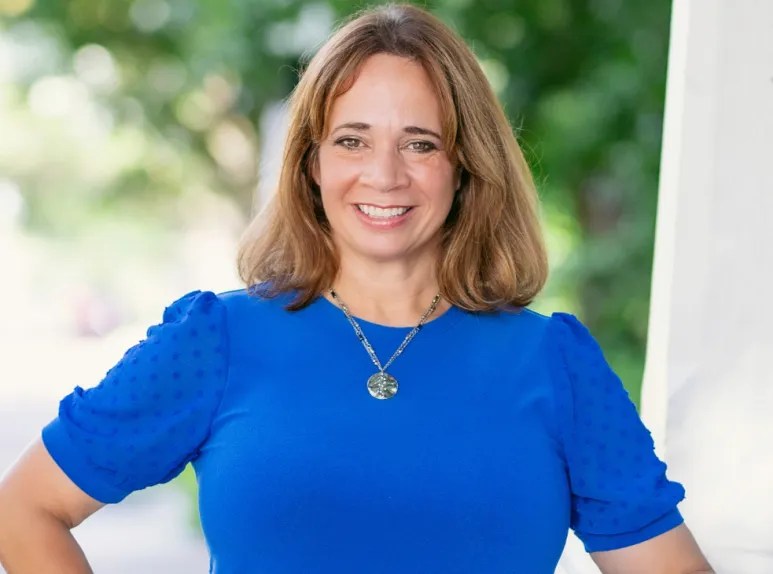
Orlando Sentinel: Letters: Semrad for commissioner
Semrad fought for rural boundary
Four people aspire to represent District 5 on the Orange County Commission, but only one, Dr. Kelly Semrad, deserves this seat. The other three say they oppose urban sprawl. But only Semrad has fought and won hard battles for a real rural boundary.
As a co-founder of Save Orange County, a grassroots smart growth organization, Semrad’s gone as far as she can as an activist fighting for preservation with help from multigenerational farmers. She’s running to achieve more, stronger protection.
Who else is running? What do they stand for?
One is Steve Leary. He’s spending massively on mailers with funds obtained from organizations like The Greater Orlando Builders Association. Why would builders who profit from runaway development support a candidate who wants sensible limits on development?
They would not, and I believe he does not.
Leary’s endorsers include Ted Edwards and Bryan Nelson. In 2016, they both voted to break the rural boundary when they sat on the Commission.
The other two aspirants: Joel Montilla makes promises but lacks a record of working on local issues. And Joy Goff-Marcil. While serving in the Florida House of Representatives, Goff-Marcil never passed a single bill. She co-sponsored bills introduced by other people but passed none herself.
As a UCF professor at the Rosen School, Semrad’s published articles for years about spending tourism tax dollars more wisely for better public transit, increased public health services and affordable housing.
With all her accomplishments, Semrad deserves a seat at the County Commission table. We need her there.
Milly Dawson Maitland
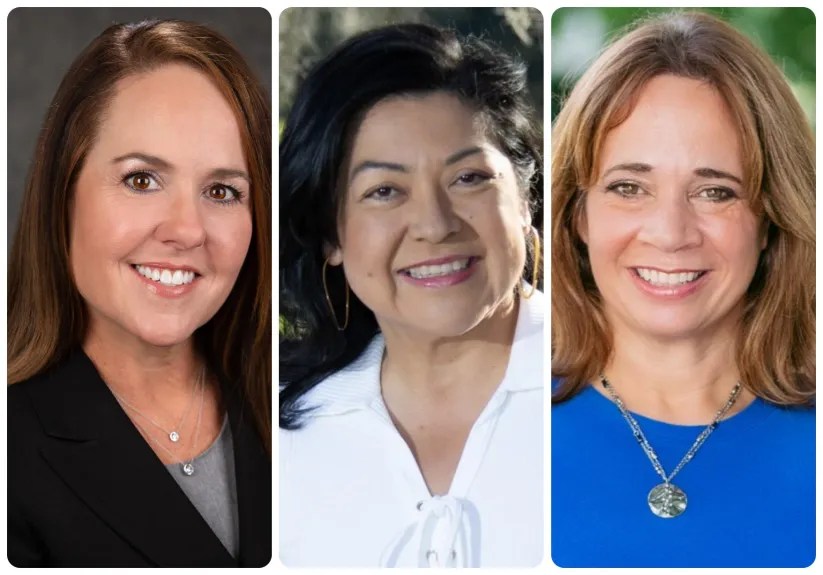
Orlando Sentinel: Endorsements: Three critical races could mark a shift on the Orange County Commission
Orange County is one of Florida’s biggest governments, home to massive tourist destinations and full of voters who expect modern, progressive policies from their leaders. This is the county that sent the first Gen Z representative to Congress and that joyously embraces its natural and cultural heritage. Voters have every right to expect modern, forward-thinking, responsive leadership.
They don’t always get it. On more than one occasion, we’ve seen a County Commission majority leaning heavily in the direction of the status quo or voting to protect powerful interests. Movement on the kinds of programs most beloved by progressives has been tortuously slow: Orange County is just now considering a rural boundary rule similar to the protections that Seminole County has had for 20 years. Local leaders have been dancing around the idea of using tourist-tax dollars to meet local needs but have yet to take the lead. And Orange’s Green SPACE land-preservation program has rescued less than half the acreage scooped up by Volusia Forever.
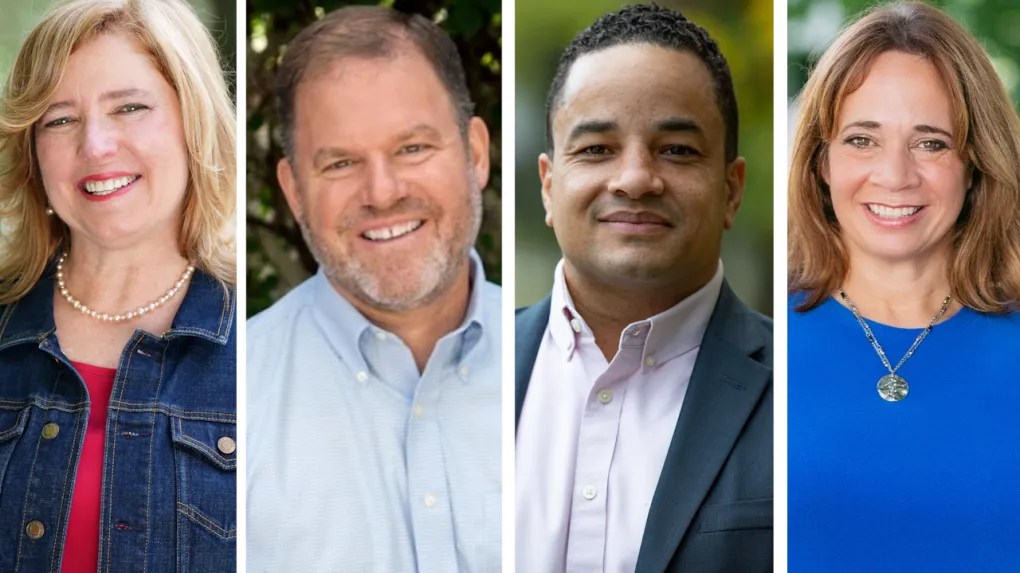
Orlando Sentinel: Election: Candidates for Orange County District 5 vary in support for rural protections
The race for Orange County Commission District 5 is wide open, the only one of three commission contests without an incumbent in the race.
It offers voters four candidates of varying ideologies and sharply different backgrounds on the Aug. 20 primary ballot to replace term-limited Emily Bonilla, the county board’s most combative advocates for controlling growth.
Bonilla swept into office in an upset in 2016, besting an opponent who had supported two Lake Pickett mega-developments east of the Econ River. Development in rural east Orange remains a key issue in the district, which also includes Winter Park and Maitland.
Commission races by charter rule are nonpartisan, meaning candidates won’t be identified on the ballot by party affiliation. But registered Democrats outnumber registered Republicans 54,500 to 44,000, in a district where another 41,000 voters identify as “no party affiliation.”
Seeking to replace Bonilla are Democrats Joy Goff-Marcil and Kelly Semrad and Republicans Steve Leary and Joel Antonio Montilla. If no one wins more than 50% of the vote Aug. 20, the two candidates with the most votes will face off in November.
All the candidates say they favor protecting Orange County’s rural lands, but only Semrad has made the issue a foundation of her campaign.
WFTV19: OCPS’s half-penny sales tax will appear on November ballot, Gilzean says
Orange County Commissioners and School Board members said on Wednesday the new Supervisor of Elections could risk two initiatives from making it on the November ballot.
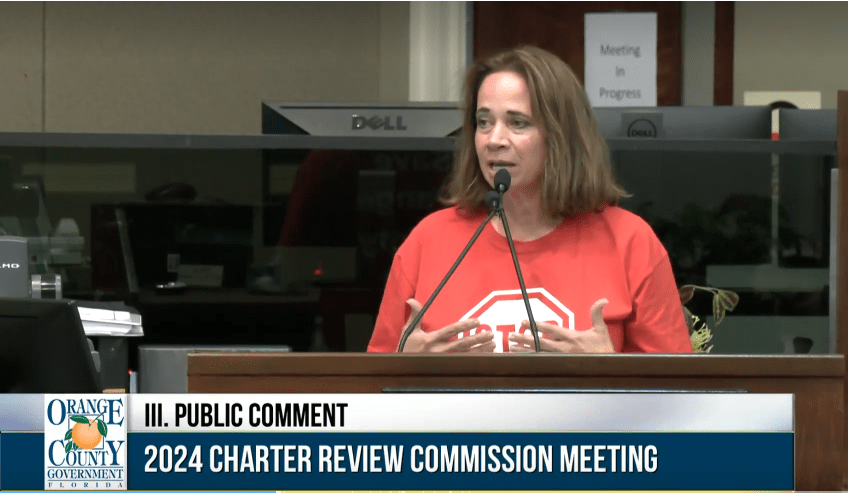
Orange County Charter Review Commission: striving to give 2024 voters the right to vote for a rural boundary
Kelly proposed that the Orange County Charter Review Commission establish a committee to investigate a rural boundary and add an amendment to the ballot this November 2024.
This proposed amendment and boundary will save Orange County citizens tax money, protect our environment, and save rural communities.
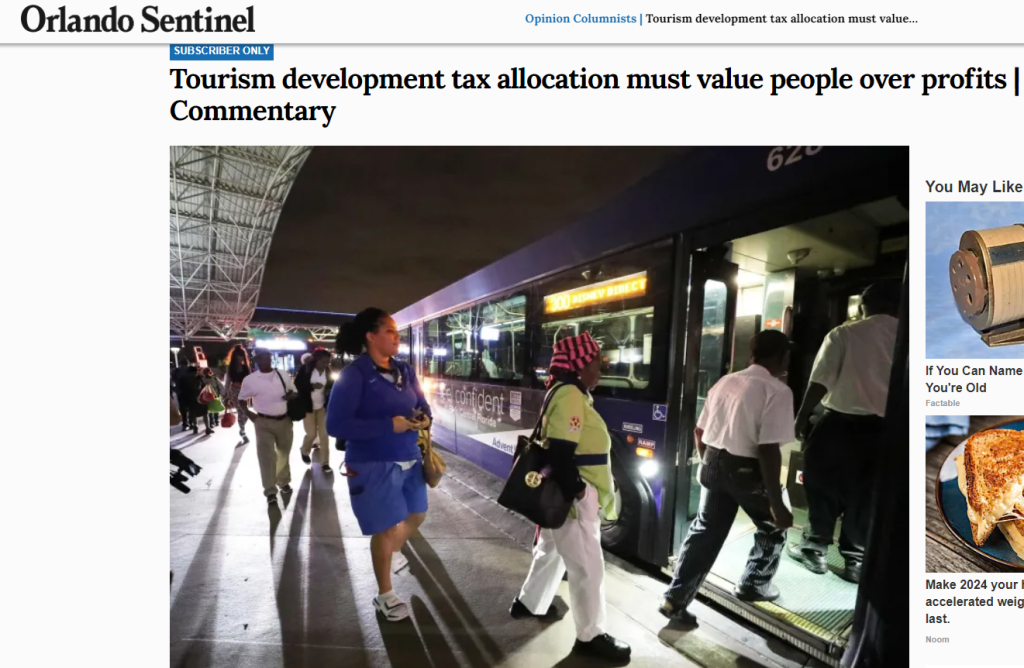
Op-ed: Tourism development tax allocation must value people over profits | Commentary
Kelly advocated for more equitable and accountable usage of our Tourism Development Tax (TDT).
Orange County hosts an average of 70 million tourists a year.
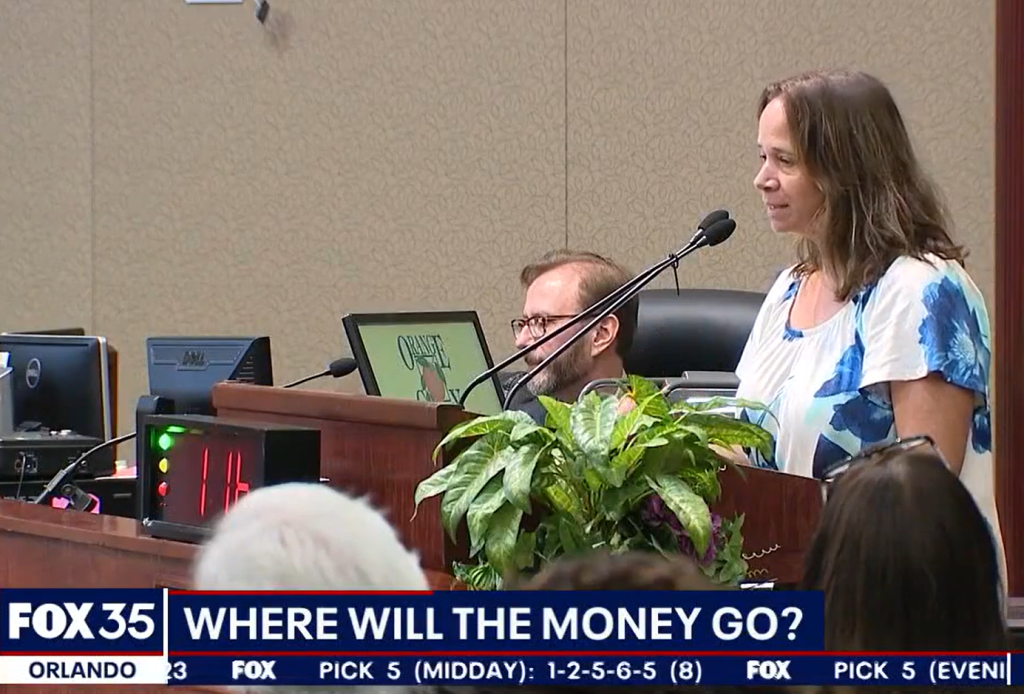
Fox News: Orange County task force on tourism development holds final meeting before awarding tax dollars
Kelly asked that OC tax revenue investments have an independent economic review.
“The Orange County Tourist Development Tax Citizen Advisory Task Force met on Monday for the final time to hear additional recommendations on how to spend tourist tax dollars. There is some opposition to the proposed allocation of funds. Some think the money should be used on affordable housing and transportation.”
“Oftentimes we reinvest in the same entities in Orange County, because they do draw large amounts of tourism, but we forget that there are a lot of other economic links that supply those products,” UCF Associate Profession of Tourism & Hospitality Kelly Semrad said.”
Spectrum News 1: Orange County’s 2023 Tourist Development Tax Dollars Down from 2022
Kelly offered tourism expertise regarding post pandemic tourism.
“The month of December 2023 saw a 4% dip in collections compared to December 2022, which, according to the TDT report, was the eighth month out of the last nine that saw a year-over-year decrease.”
“Dr. Kelly Semrad, who specializes in hospitality management at the University of Central Florida, said the drop-off should not be surprising. Florida touted being open during the COVID-19 pandemic, but by 2023, Semrad said the rest of the world was open as well.”
“I think we people are over the travel rage, getting out past COVID and the pandemic,” Semrad said. “We are seeing that immediate demand taper off now. We are going to see new travel trends in a post-pandemic world.”
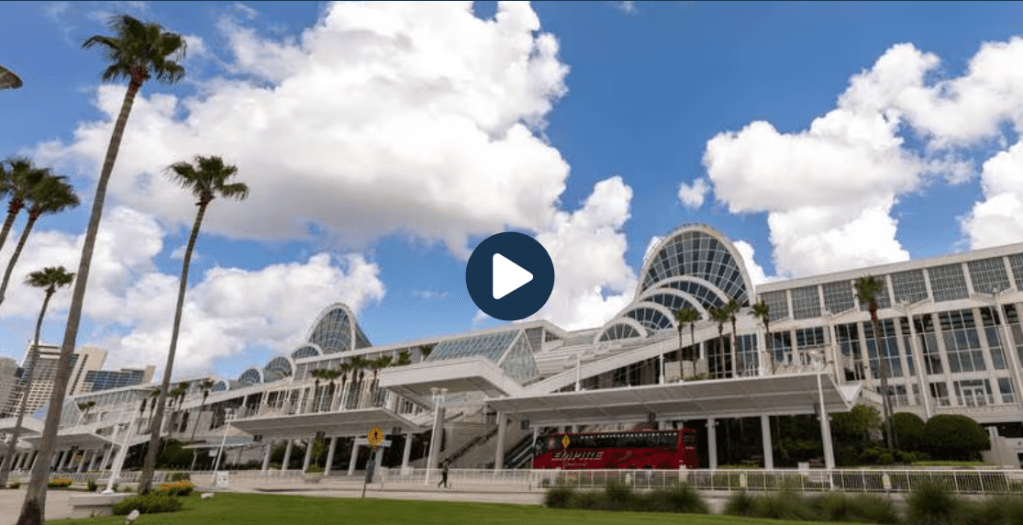
WFTV9: Push underway for Orange County to use tourism tax dollars for issues other than tourism
Kelly advocated for smarter tourism investment.
“Millions of Orange County tourist tax dollars are up for grabs, but only a small list of things can get the money despite the area’s needs. Many people have been pushing for other uses of the dollars not linked to the tourism industry.”
“Semrad said she thinks Orange County’s hotel taxes do need to be invested in immediate tourism infrastructure. But she points to other counties in Florida that have also found other uses for the funds.
“Semrad said she believes taxes from Orange County’s $75 billion industry could fund things like public transit or even address affordable housing, but that would mean getting Tallahassee to make a change.”
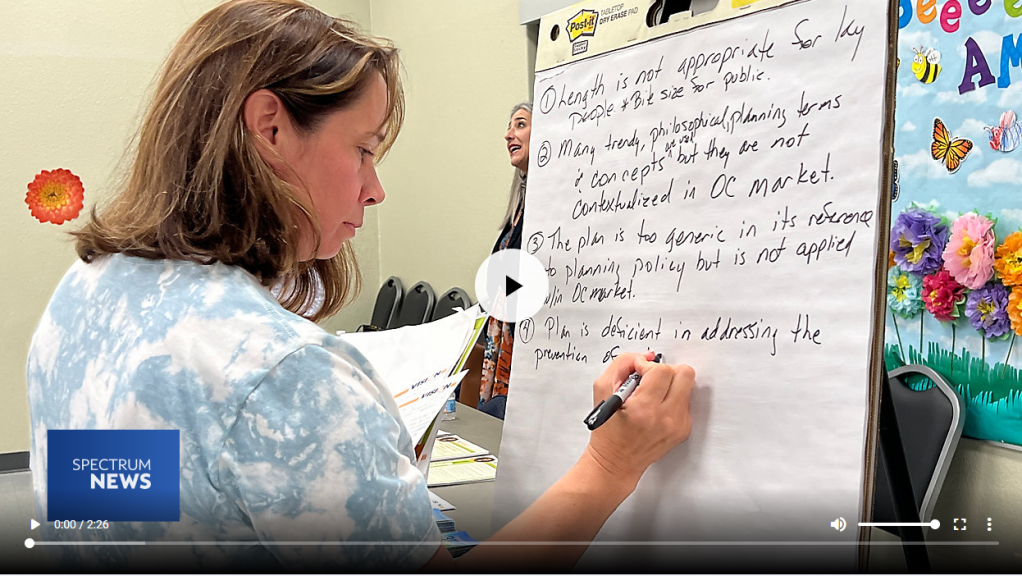
Spectrum News 13: Orange County residents asked for feedback on Vision 2050 plan
Kelly provided input to Orange County’s comprehensive plan Vision 2050.
“Semrad, vice chair of the organization Save Orange County, believes that the plan fails to address sustainable growth practices and resolve existing issues.”
“Spectrum News 13 spoke to her back in 2021 about growth in her rural community east of the Econ River. She shared that now years later, this plan still does nothing to solve that.”
“There are a lot of growth and unsustainable practices that citizen advocates have been begging for,” she said. “And it is concerning to see that those concerns are not reflected in the current draft.”
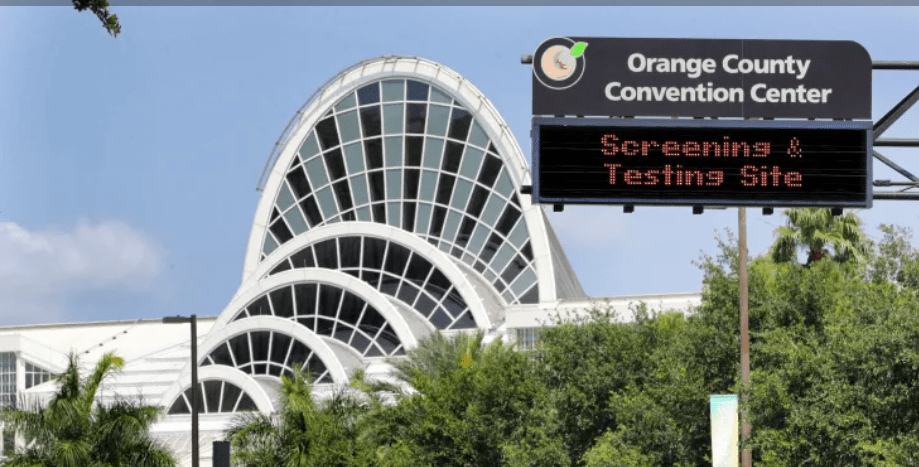
Orlando Sentinel: Editorial: Orange County leaders balk at tourist-tax allocation. That’s good
Kelly offered expertise and assistance to local leaders on the tourist tax.
“Putting the brakes on big-dollar comments to this area’s biggest venues, while spearheading the drive to expand uses of tourist-tax funding, would give Orange County breathing room to conduct a truly in-depth study of its own funding and identify the wisest uses. It would allow for input from some of the nation’s smartest tourism experts — many of whom are headquartered at the University of Central Florida.”
“Let us help you,” said UCF’s Kelly Semrad, one of dozens of academics devoted to the study of the hospitality industry. “It’s what we do.”

Orlando Sentinel: Tourism development tax allocation must value people over profits | Commentary
Kelly writes about our tourism development tax and why the tourism industry workers deserve better.
Orange County hosts about 70 million tourists year-round. Of course, tourism has provided our economy’s foundation. However, it takes a toll on our vulnerable populations leaving us last in wages with incredible rising costs of living. Orlando’s hard tourism infrastructure (the convention center, etc.) is among the country’s best.
Generally, Orlando’s tourism industry boasts jobs with low income and poor work conditions. But Orange County, (like all Florida counties) has an opportunity to improve people’s quality of life via our Tourist Development Tax (TDT).
As an expert, I’ve experienced a plethora of emotions while trying to figure out why our elected officials don’t have the data needed to decipher the corporate gains vs. the social costs for tourism workers. There’s also been no reference to determine the point of diminishing returns for each investment made. The county must conduct a legitimate economic impact study pertaining to gains and losses that our tourism-based economy passes to people. An unbiased party should conduct the study and results should be validated by external reviewers. I’m certain that the results will be different than the picture the industry bosses present at county commission meetings.

UCF Today: New UCF study finds reasons why hospitality Workers aren’t returning after COVID
Kelly shared her research on the tourism industry.
“The hospitality industry was one of the hardest hit by the COVID-19 pandemic, with more than 3.5 million jobs lost in 2020, according to a report by the Economic Policy Institute.”
“Reasons workers aren’t returning include safety concerns about COVID-19 exposure and perceived lack of career benefits in the U.S. hospitality industry, according to the study.”
“Study co-authors were Kelly Semrad, an associate professor, and Manuel A. Rivera, assistant dean and an associate professor, both in UCF’s Rosen College of Hospitality Management.”
Orlando Sentinel: Disney, other tourism workers need $18 minimum wage to get by, report says
Kelly’s expertise supporting a report calling for higher wages in the tourism industry.
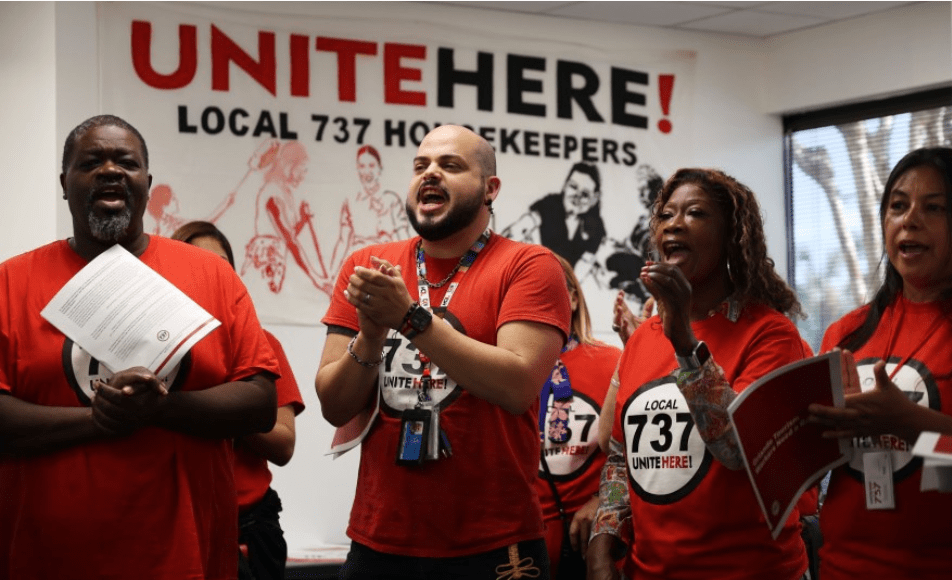
Orlando’s tourism workers, long among the lowest paid in the region’s economy, must earn at least $18 per hour to meet basic needs, a hospitality industry union argues in a report released Thursday.
The report by Unite Here Local 737 found that 69% of hospitality staff surveyed at five Orlando employers, including Walt Disney World, struggled to pay their rent or mortgage each month and 39% worried about becoming homeless.
In addition, 45% said they skipped meals and 25% went without prescribed medicine because of the costs, and 62% said they had less than $100 in savings. The workers in the union study earn a median of $16.50 an hour, or $34,320 annually.
At Thursday’s event, UCF hospitality professor Kelly Semrad said the survey’s results are unsurprising. Its claims are corroborated by university research, which has found tourism employees often experience poor quality of life due to low wages, limited benefits and poor working conditions.
“And yet, they are the very people that the industry is depending on to serve the customers so that the businesses can make money,” said Semrad, who recently campaigned for Orange County mayor but lost to incumbent Jerry Demings. “It isn’t right.”
Local legislators joined Semrad to voice their support for higher wages in the tourism industry, including State Rep. Anna Eskamani, D-Orlando; State Sen. Victor Torres, D-Kissimmee; and State Rep.-elect Rita Harris, D-Orlando.
Local 737 Union: Orlando Tourism Workers Need a Raise
Kelly assessed and agreed with the UNITE HERE Local 737 union research on the needs of our tourism industry workers.
UNITE HERE Local 737 is the proud union of workers in Walt Disney World Food & Beverage and Housekeeping, Palmas Services, Patina Restaurant Group, the Buena Vista Palace Resort & Spa, the DoubleTree by Hilton Hotel at the Entrance to Universal Orlando and Centerplate at the Orange County Convention Center.
“This report demonstrates findings that are in line with our research, which indicates that tourism and hospitality employees work in poor conditions and struggle to make a livable wage. These employees are the heartbeat of our local economy. Without them, the tourism industry cannot function. Tourism benefits our entire community via an economic impact that assists in supporting our schools, parks, public safety, infrastructure, and quality of life.
We have been fortunate that post COVID our tourism tax income is breaking
records, boasting monthly tourism tax collection records and earning the highest annual collections in a fiscal year. We are the nation’s number one tourist destination. We are also the nation’s lowest in paid wages. Our
research indicates that most of the industry’s wages are not commensurate with the cost of living.”

Fox 35: Orange County commissioners direct tourism dollars to Camping World, Kia Center
Kelly advocated for investing tourism funding toward community development.
“The other side of the argument, as public speaker Dr. Kelly Semrad brought up, is that the County needs to invest in the things that make people willing to visit.”
“Unless we keep Orlando an attractive destination for tourists to come to, we will lose our tourism,” said Dr. Semrad, who has a Ph.D. in Hospitality.

Spectrum News 13: Orange County Convention Center staff says events skip Orlando over facility’s size
Kelly speaking to smart growth for our convention center.
The Orange County Convention Center isn’t just the second largest convention center in America, it has also had continuous upgrades over the years, and some are hoping to see even more.
Professor Dr. Kelly Semrad teaches tourism, events, and attractions at the University of Central Florida, and says the Orange County Convention Center has more than enough space and upgrades over the years. She also pointed out that financially, it is doing just fine the way it is.
“To my knowledge, we have never had a convention that has said Orlando we can’t come to you because you are not big enough,” Semrad said. “What this TDT (Tourism Development Tax) does is allocate the funds to expand the Convention Center, we are not losing business because the Convention Center is not large enough.”
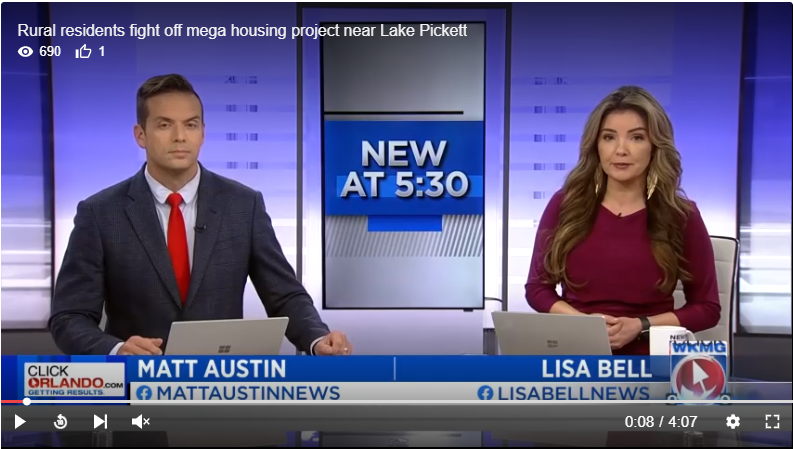
Click Orlando.com: Rural residents fight off mega housing project near Lake Pickett
Kelly fights to protect rural land near Lake Pickett.
It was a sigh of relief for homeowner Kelly Semrad who spoke at the meeting.
“I’m so thankful the community showed up,” she said. “Twelve hours of sitting and waiting to try and publicly speak out and support your community is a really big endeavor to be successful at, and they were, and they have been for a decade.”
“So, we’re super excited about that but also frustrated that we have to fight so hard,” she said. “Why do citizens have to fight so hard to protect where they live when the county promised it would stay a rural community?”
Press Coverage of OC Annexation & Rural Boundary Amendments
Orlando Sentinel: Orange County OKs deal that blocks Deseret Ranch annexation
Orange County commissioners unanimously backed a deal Tuesday that effectively kills an annexation of 80 square miles of ranch land into Orlando’s city limits, rejecting a last-minute effort by the landowner to relax its terms.
The deal between Orlando and Orange County governments — first revealed publicly by the Orlando Sentinel last week — calls for the county to drop its opposition to a smaller but still substantial annexation of Tavistock’s planned Sunbridge development, and the city to drop consideration of the enormous annexation of Deseret Ranch.
Such annexations are usually a precursor to urban development on rural lands, a fact which had made both proposals hotly controversial.
As part of the sweeping agreement, the county also would approve more than $600 million for upgrades to the city-owned Kia Center and to Camping World Stadium, to be funded with Tourist Development Tax dollars. In addition, the city would transfer its curbside recycling to a county-owned facility, the county would shift control of its Work Release Center for inmates to Orlando to be used as a homeless shelter, and the two governments would enter a broad planning agreement to govern future annexations.
“From my perspective, we take control,” Orange County Mayor Jerry Demings said of the agreement and its impact on the controversial Deseret Ranch annexation, which would have boosted the footprint of Orlando by 60 percent. “If the majority of this board votes for this today, the 52,000-plus acres will effectively be off the board.”
Late Monday, Farmland Reserve, the landowner of Deseret Ranch and a subsidiary of the Church of Jesus Christ of Latter-Day Saints, offered an amendment to the agreement – which it contends was negotiated without its knowledge. The proposed amendment, signed off by the President of Farmland Reserve who flew in from Salt Lake City, would have allowed Farmland Reserve to proceed with a smaller annexation of nearly 8,000 acres of ranch land into city.
That chunk of its land is more development-ready, said Don Whyte, who oversees the planning of the ranches.
Orlando Sentinel: Orlando gives initial OK to massive Deseret Ranches annexation
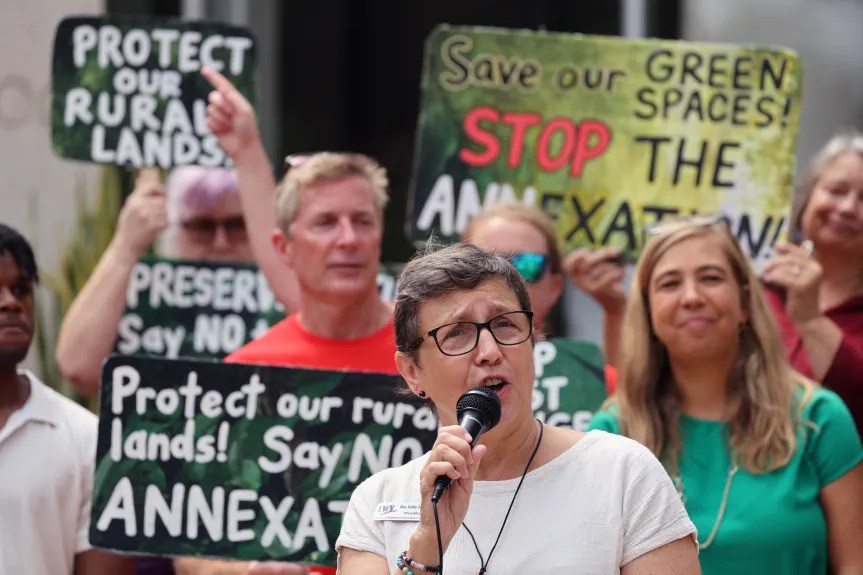
Despite fierce opposition from dozens of environmental activists, Orlando city leaders endorsed the annexation of Deseret Ranches, a move that would massively expand the city’s boundaries, taking in tens of thousands of acres of undeveloped ranches and wetlands.
By a 6-1 vote, the annexation gained the initial approval of the council Monday. The proposal faces a second vote next month, which would bring the ranches into the city ahead of Election Day, when county voters consider a ballot measure putting stricter rules on such a move. Commissioner Patty Sheehan cast the lone opposing vote.
The ranches, owned by a for-profit arm of the Church of Jesus Christ of Latter-Day Saints, span a swath of 300,000 acres across Osceola, Orange, and Brevard counties. The church is seeking to annex to Orlando 52,454 acres bounded by State Road 50 to the north, State Road 520 to the east and Osceola County to the south. The annexation would increase the footprint of Orlando by about 60 percent, shifting the city’s center of gravity sharply to the east with the addition of lands some 25 miles or more from city hall.
In remarks opening the hearing, Mayor Buddy Dyer contended the city never sought the annexation, but that the landowner wants to enter the city quickly because of the November charter amendment that hands Orange County veto power over many future annexations, rewriting the rules for how cities like Orlando have traditionally grown.
“This property owner is here because of Orange County’s rushed and rash decision…that would prevent the property owner from choosing their local government,” he said. He complained that the county charter amendment would preempt the city’s authority.
“This is blatant preemption, just like the Florida legislature uses,” he said. To qualify for annexation, property must directly touch existing city boundaries, which the Deseret land does now that the city annexed Tavistock’s planned Sunbridge development earlier this year. That annexation and another related one brought nearly 12,000 acres of mostly undeveloped land to the city while sparking objections from Orange County officials and environmentalists that have continued with this latest proposal.
In announcing its application last month for Deseret Ranches to be annexed, the church’s subsidiary Farmland Reserve stated in a news release that “the environment always comes first” and that its eventual development plan would reflect a “commitment to sustainable, long-range, smart-growth planning.”
Environmentalists opposing the proposal contend the church is instead trying to evade the stricter environmental regulations present in Orange County in favor of the more urban rules of the city. In a letter to Dyer and city commissioners last week, the head of Audubon Florida called on them to reject it.
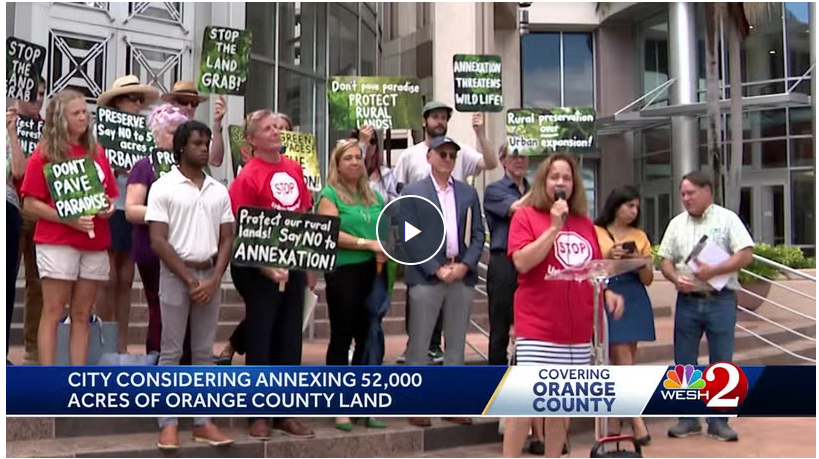
WESH2: City of Orlando could expand by thousands of acres — opponents call it massive land grab
The City of Orlando is one step closer to adding tens of thousands of acres of land that would triple the size of the city proper.
Inside City Hall on Monday afternoon, Mayor Buddy Dyer addressed the potential massive expansion of the city’s boundaries through the annexation of land from unincorporated eastern Orange County. “As a city, we will insist there will be no development on this land, listen to me here, no development on this land until at least 2040,” Dyer said.
Orlando City Council is considering the annexation of more than 52,000 acres of land owned by the Mormon church. “This property owner is here because of the county’s rash decision and rushed decision to propose new regulation that would prevent the property owner from exercising their right to choose their local government,” Dyer said.
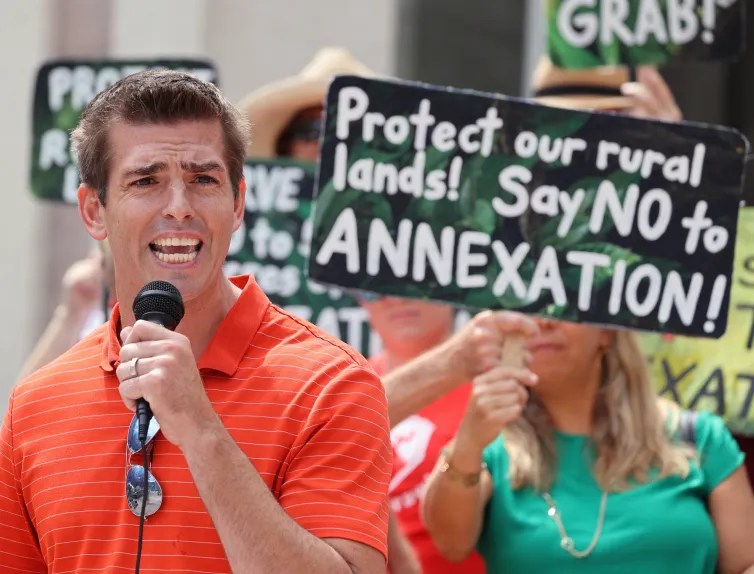
The group Save Orange County is accusing the city council of rubber stamping a massive land grab before voters decide in the November ballot amendment whether to give the county commissioners the power to approve or deny voluntary city annexations.
“Why is that land important?” asked Kelly Semrad, a candidate for Orange County District 5 Commissioner. “It’s the St. Johns River basin. What have we learned over the course of time in Florida? If we fill in our wetlands, we flood ourselves out. What do we get when we flood ourselves out? Property insurance that is increased.”
In front of signs with messages such as “Don’t Pave Paradise,” the president of the Orange County Fire Fighters Association Chris Richie raised concerns about the potential impact on public safety.
“Right now, there’s annexation areas in our county that the city cannot provide coverage to that the county still responds,” Ritchie said during a protest before Monday’s council meeting. City Council still needs to have a second reading of the ordinance before approving the annexation that would vastly expand the city limits. The next hearing is scheduled for Oct. 21.
Orlando Sentinel: Commentary: The fiscal case for Orlando not annexing Deseret Ranch
If you are a City of Orlando taxpayer — either a resident or business owner — you should be very concerned with the city’s proposal to annex Deseret Ranch.
In a city where infrastructure projects ranging from a few blocks to a few miles have lingered for months and years, a developer is now pushing it to annex huge swaths of land 30 miles away. OUC projects on Orange Avenue and Robinson Street have caused headaches for residents, made school dangerous for Howard Middle students, and decimated small businesses without any financial help from city government. The same has happened with the state project on South Orange Avenue that has dragged on for years now. Communities that should welcome future infrastructure improvements now dread continued, drawn-out delays that are occurring on every project.
Instead of focusing its energy on completing these projects, the city is seriously considering using your tax dollars to kowtow to a wealthy developer for a project that has zero connection to the actual City of Orlando.
Growth doesn’t pay for itself in Florida. Period. Impact fees are never high enough to pay for the long term infrastructure costs that come from new growth. And for good reason — it’s wildly expensive. Which is why it’s usually bonded out over 30 years. If a developer had to pay that 30 years worth of expense upfront, the cost to build would be prohibitive. But you can’t issue bonds without revenue, and you don’t have revenue until you’ve built out.
As a result, for better or worse, Florida has a system for building out large new developments like this so that they don’t tax current residents. They are called Community Development Districts (CDDs). CDDs are “independent special taxing districts,” which means that they have their own independent taxes apart from the other local governments where they sit.
So, much like what used to be known as Reedy Creek, the properties inside these districts pay the same school, county, and water management taxes as other properties, but also pay special taxes to the district on top of that. The district sets its own millage and the appointed or elected board uses that within the district to pay for infrastructure projects. Importantly, the bonds are normally issued in the name of the CDD with very limited financial exposure to the city or county to risk taxpayer dollars on the development.
WKMG News 6 ClickOrlando: Activists fight annexation request from Mormon Church that could expand Orlando
Orlando City Council is deciding on whether or not to grant an annexation request that has many community members and activists upset.
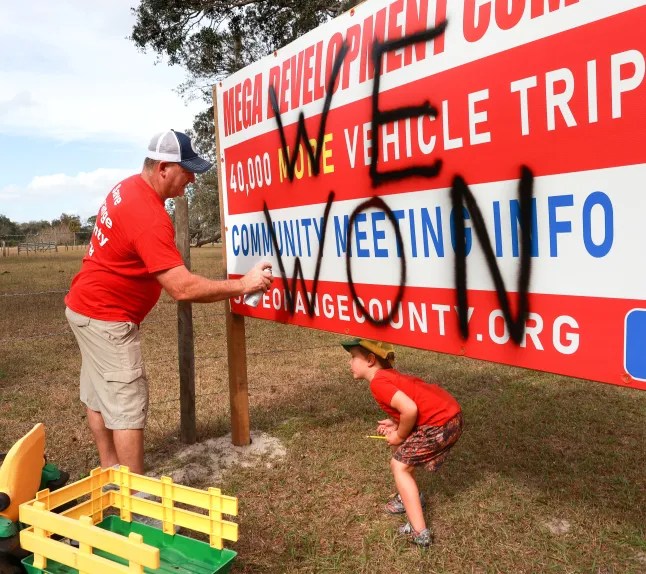
Orlando Sentinel: Endorsement: Judge protected Orange voters. Now voters should protect rural Orange County
Orange County residents won’t weigh in until November on a set of charter amendments that includes two long-awaited growth control measures. But they can already claim victory: Monday, a circuit judge shot down an attempt to shut voters up.
Ninth Circuit Chief Judge Lisa Munyon’s ruling blocks a lawsuit by the developers of Lake Pickett North LLC that would have stricken the two growth-limiting measures from the county’s eight charter amendments from the ballot. The first of those amendments would set a rural boundary that would safeguard designated areas throughout the county from careless development, requiring a majority-plus-one vote of commissioners to approve more intense development inside those protected lands or to change the boundaries of the protected rural areas. That’s hardly an insurmountable barrier for developers who can prove their proposals have the kind of environmental stewardship and economic benefit that would merit approval. But it does make it tougher for sprawl-at-all-costs growth.
The second amendment targeted by the developers would close another loophole by also requiring a super-majority vote of the Orange County Commission before cities annexed sensitive land, making it harder to circumvent county rules. This is critical to the success of both measures because, under current rules, developers can (and do) play county and city officials off each other. Later this month, Orlando officials will rule on a request from another mega-developer that wants to wrap itself in the protection of city boundaries.
……..We’ll make recommendations on the other six amendments on the ballot in a subsequent editorial. But these two are important enough to be addressed separately.
We urge voters to not rely solely on our opinions in deciding how to cast a vote. Voters should check the candidates’ campaign websites and social media accounts (if they don’t have either, that should be a red flag). Ask friends and neighbors what they think. Google the candidates and check out their campaign finances. In addition, we’ve recorded our interviews and posted them in full at OrlandoSentinel.com/opinion.
Election endorsements are the opinion of the Orlando Sentinel Editorial Board, which consists of Opinion Editor Krys Fluker, Insight Editor Jay Reddick and Editor-in-Chief Julie Anderson. Send emails to insight@orlandosentinel.com.

Central Florida Public Media: Environment & Climate: Orlando Council to weigh in on huge land annexation request
Orlando City Council is slated to hear on Monday a first reading of an ordinance that, if granted, would grow the boundaries of the city proper by 52,454 acres.
That’s more than 68% of the city’s land area according to the city’s growth management plan. Since then, the Orlando City Council has approved annexations of additional land from unincorporated Orange County: like earlier this year, when the county fought City Council’s unanimous decision to annex more than 6,000 acres along State Road 528
“I’m glad the court upheld the community’s right to be heard by rejecting the Lake Pickett North ballot injunction,” she said. “East Orange County residents deserve a say in decisions that impact their future, and I’ll continue to stand with them.”
This annexation request for more than 52,000 acres comes from Farmland Reserve, Inc., a Mormon Church affiliate based in Utah, which owns Central Florida’s Deseret Ranches. A spokesperson for Farmland Reserve declined to comment on the pending request until after Monday’s first reading of the ordinance.
The group Save Orange County scheduled a rally immediately ahead of Monday’s Council meeting to voice opposition to the request. Vice Chair Kelly Semrad, who is also running for District 5 Commissioner in Orange County, described the pending request as “the living case of study of how you don’t develop.”
Semrad cited growing concerns that different forms of regional infrastructure — like roads, schools and water management systems — are being pushed beyond capacity, as more people flock to Central Florida.
“Every time that you talk about extending your city limits to grab new land, you’re creating more demand on the systems that are needed that are already failing,” Semrad said. “It’s like they’re talking about building for the future while they’re not even sustaining the current.”
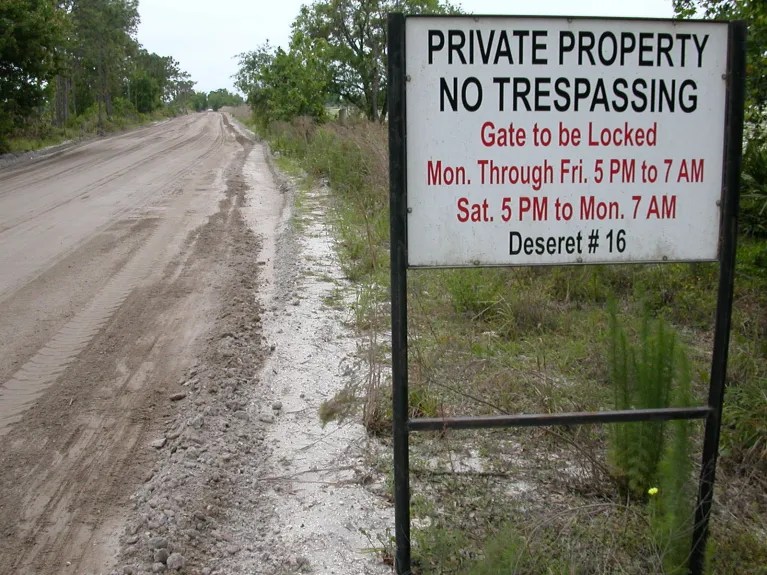
Orlando Sentinel: Editorial: City shouldn’t allow itself to be stampeded on Deseret Ranch annexation
When Orlando City Council members take their first look at a massive proposed annexation this week, they will hear some big numbers: The Farmland Preserve/Deseret Ranches property covers an astounding 52,453 acres, or 82 square miles. And they’ll hear a lot of talk from the folks who want to develop that property — gentle boasts about their stewardship and eco-friendly planning, designed to soothe fears about the impact of plopping down a development the size of a good-sized city in the middle of unspoiled wetlands and pastures.
But city leaders really only have to keep one number in mind: 100. As in, 100% of Orlando city voters are also registered to vote in Orange County. And as Orange County residents, they will be deciding— in just a few months — on two county charter amendments that are designed to mitigate the pitfalls of giant, gulping annexations like this.
It’s clear that the owners of the Deseret Ranch property are trying to stampede the city into taking on this project before voters have the chance to put guardrails on the kind of hasty action that can only benefit the interests of developers. They’ve as much as said so — in August, when they announced they would be seeking annexation, they implied the county had been too difficult to work with. That sounds a little like code for “they won’t let us get away with anything” — the regulatory equivalent of “if Mom says no, ask Dad.”
City officials should not allow themselves to be rushed. And Orlando residents should reach out to their commissioners, hopefully before Monday’s preliminary vote, and let commissioners know they don’t appreciate the developers’ attempt to undercut voters at the ballot box in November.
They can also urge Orlando officials to ask the right questions.
Why would Orlando leaders undercut their own residents to make one big landowner/development group (a “for profit investment affiliate” of the Church of Latter Day Saints) happy? Why would they saddle Orlando taxpayers with potentially massive bills for extending city utilities, police services, schools, roads and other amenities to hundreds of thousands of newcomers whose numbers can’t even really be estimated — because Deseret’s plans are so lamentably vague? What is the massive rush to get this approved, just a few months before voters have the chance to set standards for handling this kind of mega-development?
And why would Orlando commissioners accept the implicit insult — that they will be easier to manipulate or even dominate than county leaders? Why would they strain municipal resources by agreeing to oversee development on a scale that city planners aren’t really set up to manage?
In a precisely worded letter to city officials, the leader of Florida Audubon laid out the discrepancies between the way the city of Orlando and Orange County government handle development. City leaders often focus on issues such as improving blighted areas and providing a balance of big-city energy and historic suburban communities, Julie Wraithmell pointed out. County government, on the other hand, has the expertise and the regulatory guardrails to deal with projects that carry the potential for significant impacts on local ecosystems, transportation networks and regional quality of life.
Much of the land to be annexed falls within the Florida Wildlife Corridor, which is providing critical habitat for hundreds of species of animals, birds and plants. The property is also significant for Central Florida’s drinking-water supply, provides hydrological stability to major ecosystems and serves as a flood-control mechanism for the region, Wraithmell wrote in her letter to the commission.
Orlando commissioners don’t have to decide, right now, who to believe: The owners of the property, or the environmentalists and smart-growth advocates who are predicting that the project could put an unsustainable strain on natural and government resources alike. They don’t have to speculate how many dwelling units the new development might include, or how much the city will have to shell out for the services those new residents will need. And commissioners definitely shouldn’t rush into an action that is purposefully designed to silence their own constituents’ voices.
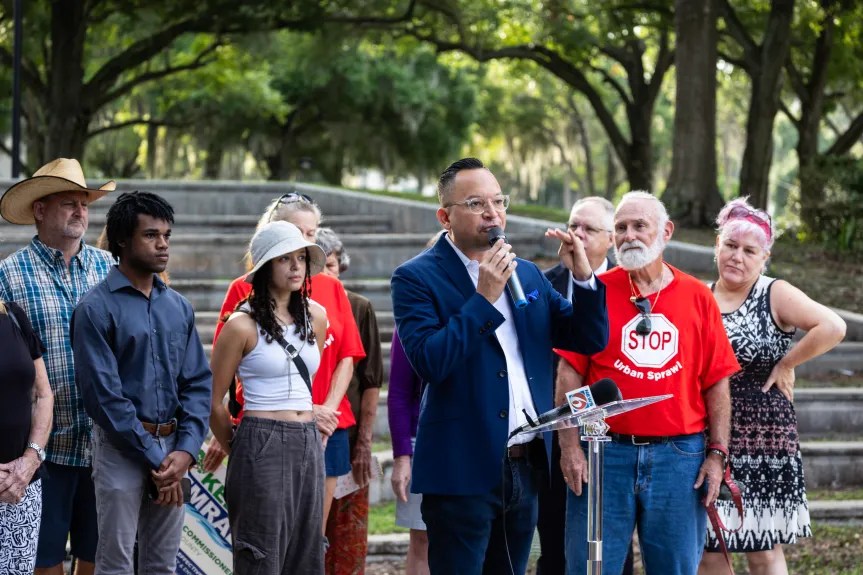
Orlando Sentinel: Judge: Orange County’s growth-control measures can go on November ballot
Ruling is a blow to landowner who has sought to build in rural area.
“The Court recognizes that granting the requested injunction would be a drastic remedy because it would effectively resolve the case by granting Plaintiff its ultimate requested relief, which is to prevent the voters of Orange County from deciding whether to approve these amendments to the County Charter,” she wrote. Commissioner Emily Bonilla, whose district includes the Lake Pickett property, said she was thrilled with the ruling.
“I’m glad the court upheld the community’s right to be heard by rejecting the Lake Pickett North ballot injunction,” she said. “East Orange County residents deserve a say in decisions that impact their future, and I’ll continue to stand with them.”
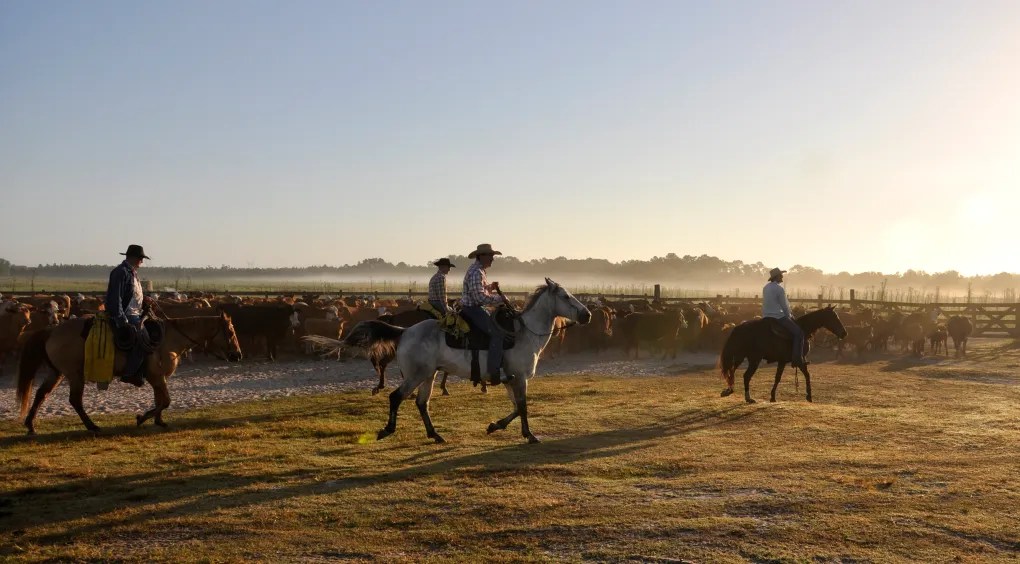
Orlando Sentinel: Audubon to Orlando leaders: Reject Deseret Ranches annexation
The city is expected to weigh in on the 50,000-acre-plus addition for the first time next week. With city leaders expected to weigh in next week for the first time on a massive expansion of Orlando’s boundaries, the state’s top environmental advocacy group is calling on them to pump the brakes.
In a letter to Mayor Buddy Dyer and city commissioners, Audubon Florida said the city — which mostly oversees urban lands and developments — is not well-equipped to govern the 52,453 acres of ranch and natural lands that encompass Deseret Ranches. The group favors leaving the sprawling property — owned by a subsidiary of The Church of Jesus Christ of Latter-day Saints — under the control of Orange County government.
“County regulations understandably provide more protection for rural wetlands, scrub, longleaf pine and other ecosystem components than Orlando’s,” Audubon Florida Executive Director Julie Wraithmell wrote in the letter dated Friday, noting that the county’s boundaries include remote rural and natural areas. “The city’s regulations are instead tailored to the city’s more urbanized areas.”
Click Orlando.com: Developers sue to block Orange County rural boundary measures from November ballot
Lake Pickett North LLC filed the lawsuit Friday against Orange County and its supervisor of elections, Glen Gilzean, in hopes a judge will deem null and void the county’s recently-passed Rural Boundary Charter Amendment and Municipal Annexation Charter Amendment ordinances.
Lake Pickett North LLC, along with Orlando-based Canin Associates, sought to develop the ranchland between UCF and Lake Pickett with 1,789 homes and 90,000 square feet of community space. While the developers promised the neighborhood would be environmentally focused despite coming shoulder to shoulder with a conservation area, current Orange County Commission District 5 runoff candidate Kelly Semrad said in January, “it’s just a bad nightmare.”
“We’re building growth and development outside of the urban service area into the rural area where there’s no infrastructure to support it,” she said. “It begins to impact the quality of life of all the residents who live there and the residents who will be there in the future.”
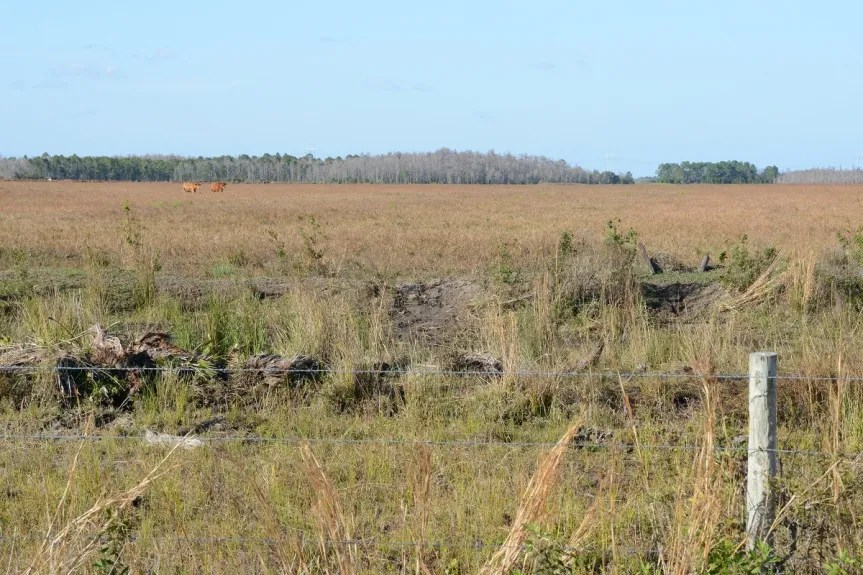
Orlando Sentinel: Mormon church seeks to annex 52,450 acres of ranchland to Orlando
The owner of Central Florida’s Deseret Ranches, an undeveloped frontier so vast that its horizons appear to follow the earth’s curve, announced Monday its intentions to partner with the city of Orlando for urban growth across a staggering amount of ranchland in coming decades.
The Church of Jesus Christ of Latter-day Saints, through its subsidiaries Farmland Reserve and Deseret Ranches, confirmed that it has filed an application with Orlando to voluntarily annex into the city limits 52,450 acres now under the land-use jurisdiction of Orange County government.
The bid to voluntarily annex into the city of Orlando appears to be a high-stakes gambit to dodge a referendum on the November ballot that, if approved by Orange County voters, would give county leaders the power to veto annexations – and, by extension, potentially thwart development in rural areas like that envisioned by the church.
If successful, the annexation would place some of Central Florida’s most important wildlife habitat, open spaces and water resources – an expansive cradle of sloughs, marshes and open water between the Econlockhatchee and St. Johns rivers – under the oversight of a government entity that has relatively limited experience in those areas, the city of Orlando.
The church in its statement cited other priorities for wanting to add the tract to city limits. “Putting this Deseret Ranch property under a single municipal government will avoid the piecemeal planning of the past,” said Doug Rose, Farmland Reserve president. “We look forward to working with the City of Orlando, a municipality known worldwide for its superb quality of life, strong community culture, and growing high-tech economy.”
Orlando Sentinel: Exclusive: Huge annexation could mean two-thirds boost in size of Orlando
Orange County’s Tuesday decision to place a measure on the November ballot limiting annexations may spark a profound change in Orlando’s future: The rapid addition to the city of as much as 60,000 acres of ranchland owned by the Mormon church.
Maneuvering to get ahead of limitations the voters may impose, Deseret Ranches is exploring a move that could boost by two-thirds the geographic size of Orlando, even though the church subsidiary hasn’t revealed immediate plans to develop most of the land. The church’s long-term plan calls for a half-million people on its total of 300,000 acres across Osceola, Orange and Brevard County by 2080.
That’s about the population of Seminole County, inhabiting what are now mostly undeveloped lands used primarily for cattle, sod and citrus farming.
It’s not clear how much of that population would get tacked onto Orlando, since the plans of The Church of Jesus Christ of Latter-day Saints, Florida’s largest private landowner, are not that precise. But such a move would significantly alter the city’s map, extending its recent eastward march nearly to the St. John’s River and the Brevard County line. As of 2022, Orlando’s jurisdiction included about 76,000 acres, and annexations since then have pushed it to at least 90,000 acres.
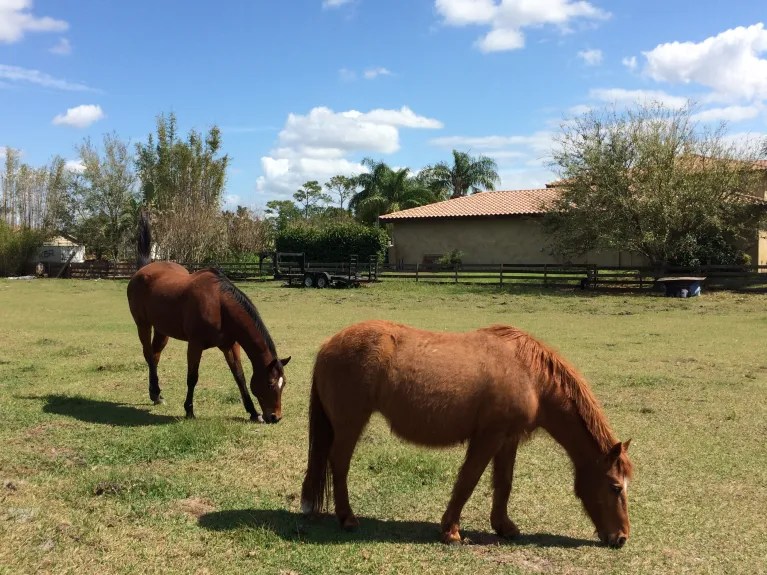
Orlando Sentinel: Orange voters to decide if county can veto annexations
Orange County voters will decide in November whether to give county leaders the power to veto attempts to annex land into cities.
County commissioners unanimously approved the ballot measure Tuesday evening, drawing cheers from advocates of the measure. It is one of a pair of sweeping growth control decisions voters will face, joining a measure to draw rural boundaries within which development projects will face higher hurdles.
The newest proposed amendment to the county’s governing document would grant it the “authority to approve or deny voluntary annexations” and approval would require a super-majority of the board of county commissioners.
Seeking Rents: Candidates in Orlando split over new rules to save rural land from suburban sprawl
A proposal to make it harder for developers to build on rural land has become a bright dividing line in three key races for seats on the Orange County Commission.
WFTV 9: Orange County mayor responds to city mayors on rural boundary, voluntary annexation
The county is working to add rural boundaries and voluntary annexation to the ballot. But the group of mayors and council are calling it “ill suited”, an infringement on home rule authority and a violation to the state’s constitutional law.
The proposals would make it more difficult to build on rural land and would grant the county veto power over an attempt to annex land.
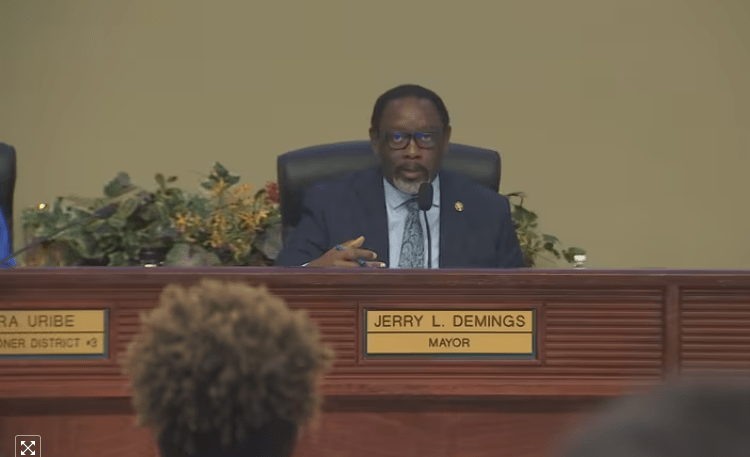
Demings said in a letter sent Wednesday the county disagrees with the stance of these other city officials. “We believe it is important to allow the residents of Orange County the opportunity to express their desires on how our community should grow by providing them with a voice at the ballot box,” Demings wrote.
ClickOrlando.com: Orange County unanimously OKs rural boundary amendment
An amendment on the November ballot will give voters in Orange County a chance to restrict development in rural areas. Ordinance 24-1068, also known as the Rural Boundary Proposal, would establish a rural area and rural boundary, as shown below on the map. It would require a majority-plus-one vote of the commission to either approve more urban development on property located in the rural boundary or to remove property from it altogether.
Dozens signed up to speak on the issue at a public hearing before the final vote Tuesday afternoon. Commissioners approved it unanimously. It will now go on the November ballot as an amendment to the county’s charter.
Orlando Sentinel Election: Candidates for Orange County District 5 vary in support for rural protections
Four contenders are seeking to replace termed-out Emily Bonilla, an ardent environmentalist.
The race for Orange County Commission District 5 is wide open, the only one of three commission contests without an incumbent in the race. It offers voters four candidates of varying ideologies and sharply different backgrounds on the Aug. 20 primary ballot to replace term-limited Emily Bonilla, the county board’s most combative advocates for controlling growth.
Orlando Sentinel: UPDATED: Landowner applies to annex another 1,000+ acres next to Sunbridge into Orlando
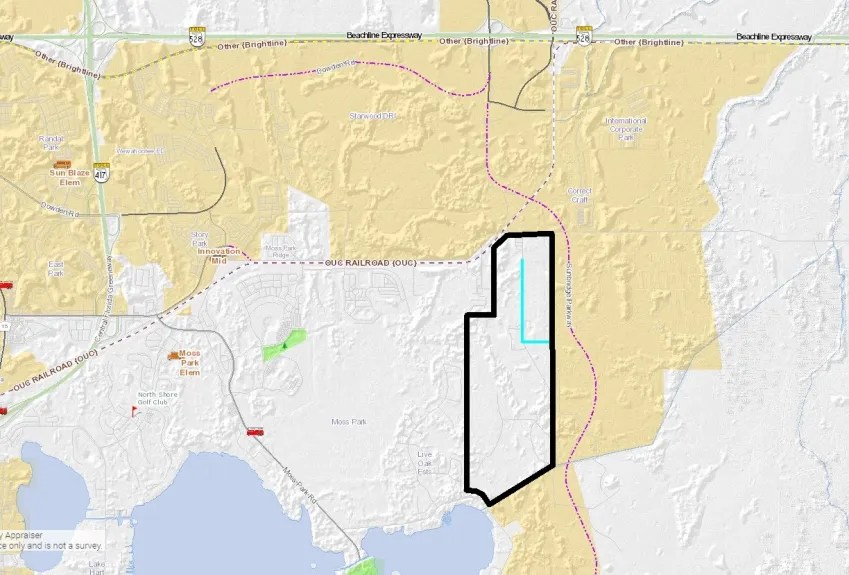
The Canadian developer that owns just over 1,000 acres west of Sunbridge Parkway has applied to annex the property into the City of Orlando. It’s the first of what could be dozens of new annexation requests as property owners look to beat the clock before Orange County can get a charter amendment on the ballot this November that would give the county veto power over future annexations.
The property known as Camino Reale has been owned by Ontario-based DG Group, which secured approvals from Orange County in 2018 to rezone the property from A-2 (Farmland Rural District) to Planned Development with a regulating plan that entitles the developer to build 3,000 homes and apartments; 330,000 square feet of commercial and office space; neighborhood parks; and a school. The land includes a net of 688 developable acres.
The rezoning had unanimous support from Orange County Commissioners, but it was contingent on DG Group securing road agreements with surrounding property owners, including Tavistock, master developer of Sunbridge. The approved road plan calls for an extension of Innovation Way running east-west that would bisect the Camino Reale property and another north-south road — both would intersect with the Sunbridge Parkway.
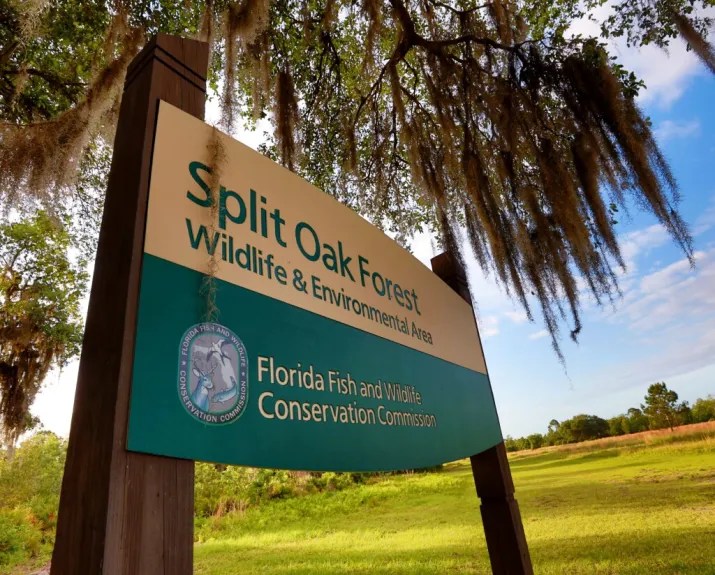
Orlando Sentinel Commentary: The Split Oak betrayal: Will Florida ever change?
Two months ago, the likely final chapter of a long-running battle played out when state and local leaders voted to plow a toll road through environmentally sensitive lands that were supposed to be protected forever.
The story was patently absurd. You don’t preserve land by paving it.
I’ve thought about those votes a lot in the weeks since and concluded they represent a bleak, defining moment for Central Florida.
It was proof that, as much as progress as Orlando has made through the years, we’re still a community run by people like the good ol’ boys who were in charge generations ago — willing to sell any land or valuable amenity to any hustler with a shiny nickel.
“Florida is still the same state that it was when people could buy lots from the back of a catalog,” said Orange County Commissioner Nicole Wilson, one of the few local officials who steadfastly defended the Split Oak Forest Wildlife and Environmental Area. “Nothing is sacred. If our public parks can be hacked away and sliced by destructive toll roads, nothing is safe.”
Wilson’s words may sound dire. But they’re also accurate. To understand why — and why this story is worth revisiting — you first must understand how Split Oak came to be.

Orlando Sentinel Environment: Will Orange County voters get to consider rural land protections? County board will decide.
Orange County commissioners will take on the rural boundary discussion Tuesday that a citizens’ panel studied for nearly a year with advocates hopeful the elected board will put the hotly contested growth control issue on the November ballot for voters to decide.
The board will get the report of the county’s Charter Review Commission and its nearly unanimous recommendation for a referendum. “Is there an appetite on the Board of County Commission to place a rural boundary amendment on the ballot and let the people of our county decide? Absolutely,” said Eric Grimmer, a lawyer who headed the charter panel subcommittee that worked on the proposal. But the board probably won’t do that Tuesday, he said.
Disagreement over where to allow new residential and commercial development has raged for a quarter century in Orange County during which the population has swelled from 900,000 people, according to the 2000 Census, to an estimated 1.5 million now. The issue is so controversial that the state legislature has already tried to block the rural boundary measure from the November ballot, and the charter panel is working to thwart its efforts.
Grimmer said establishing boundaries in the charter is necessary to “check destructive suburban sprawl.” His group’s proposed amendment, opposed by developers who argue it infringes on land-use rights, aims to protect rural lands by adding rules and language in the charter to make it harder to develop acres in unincorporated Orange County outside urban service areas.
If adopted, for instance, the new rules would require a “majority plus one” commission vote for a land-use change.
Orlando Sentinel Environment: Cash offered for Split Oak Forest road deal is tripled to $43 million
The Central Florida Expressway Authority has dramatically upped its stake in one of the region’s most controversial environmental issues ever by tripling to more than $43 million the cash it is offering to encourage state approval of a toll road crossing Split Oak Forest.
Disclosed Tuesday, the new proposal comes on the eve of a long-awaited showdown between road supporters and opponents before the Florida Fish and Wildlife Conservation Commission, which takes care of Split Oak. The agency, meeting Wednesday in Daytona Beach, appears to have the final say for the fate of the cherished conservation area of 1,700 acres just miles southeast of Orlando International Airport in Orange and Osceola counties.
“We are gratified to see FWC drove a hard bargain,” said Audubon Florida’s executive director Julie Wraithmell of the fish and wildlife commission’s months of negotiations with the expressway authority.
But Valerie Anderson, a founder of Friends of Split Oak and perhaps the most visible opponent to the road, remained unmoved by the road authority’s updated figure. “No amount of money can make up for the inability to defend conservation land here in Split Oak’s case and other conservation lands similarly situated, which is all conservation lands in the state of Florida,” Anderson said.
ClickOrlando.com: ‘It’s just a bad nightmare:’ East Orange residents once again fight rural land development
Neighbors in east Orange County are once again fighting to block a proposed development that would bring nearly 1,800 homes to their rural community.
News 6 has reported for years on the numerous plans to develop ranchland just north of S.R. 50 and west of Chuluota Road near Lake Pickett. The latest effort surrounds the Lake Picket North Community, which is east of Tanner Road and the Econ River. Orange County commissioners will vote Tuesday on whether plans can move forward for a 1,300-acre development called Sustanee, a project that would bring 1,789 homes, 90,000 square feet of community space for amenities and multi-purpose trails to the area.
For East Orange County resident Kelly Semrad, fighting to protect her neighborhood’s rural character is nothing new. “We’re back at it again, and it’s just a bad nightmare,” she said. “We’re building growth and development outside of the urban service area into the rural area where there’s no infrastructure to support it. It begins to impact the quality of life of all the residents who live there and the residents who will be there in the future.”
Despite its proximity to the Econ River basin and a conservation area, Sustanee’s website says the neighborhood will be “environmentally focused” and one that celebrates “sustainable practices.”
MidFlorida Newspapers: All Florida residents should care about fate of Split Oak Forest, and here’s why
Although Split Oak Forest spans Orange and Osceola counties, a good 45-minute drive for most Lake County residents, it is the proverbial “canary in the coal mine” when it comes to the future of conservation land in Florida. If Split Oak falls, no other designated conservation land in the state is safe from those seeking to line their own pockets at the expense of the public’s interest.
Let me put it this way: How would you feel if I forced you from your home and moved your family to what is essentially a barren landfill with no infrastructure, no food and no clean water? And my only justification for this was, “But it’s more land than the land you had before!” That is what Osceola County is asking the threatened and endangered wildlife in Split Oak Forest to do in its effort to have a toll road cut through the nature preserve.
Why does this matter for Florida residents in other counties? Up until now, if conservation land is still of “high ecological value,” then the Florida Fish and Wildlife Commission’s job is to maintain its conservation status and protect its easements. If FWC releases its easements within Split Oak for the toll road, then there is now a legal precedent. Nothing will stop the same from happening anywhere else in Florida.
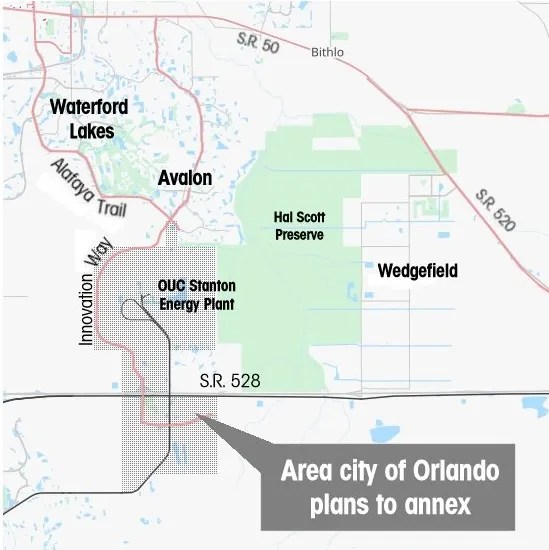
Orlando Sentinel: Orlando brushes off Orange County concerns, annexes Sunbridge
Without discussion, Orlando City Council gave final approval Monday to annexing a 6,300-acre piece of Tavistock’s Sunbridge development, brushing aside objections from Orange County and setting up a second giant addition as early as next month. Before the vote, Jon Weiss, deputy Orange County administrator, reaffirmed county concerns which he outlined in great detail last week in a four-page letter to city officials that included maps and the legal basis for the objections.
He pointed out county staff had spent more than a decade working with the Suburban Land Reserve, the real estate arm of The Church of Jesus Christ of Latter-day Saints, owner of the land that Tavistock plans to develop. “This project could have been a great opportunity to work together to ensure the best for existing and future residents of both Orange County and the city of Orlando,” Weiss said in brief comments to city council before its vote.
After the council’s unanimous decision, Weiss said county commissioners could still challenge the annexation by following a “governmental conflict-resolution procedure” established in state law in part to settle annexation disagreements, though he stopped short of saying the county will do that.
Commissioners have 30 days to initiate the procedure which could lead to a joint session of the two boards.
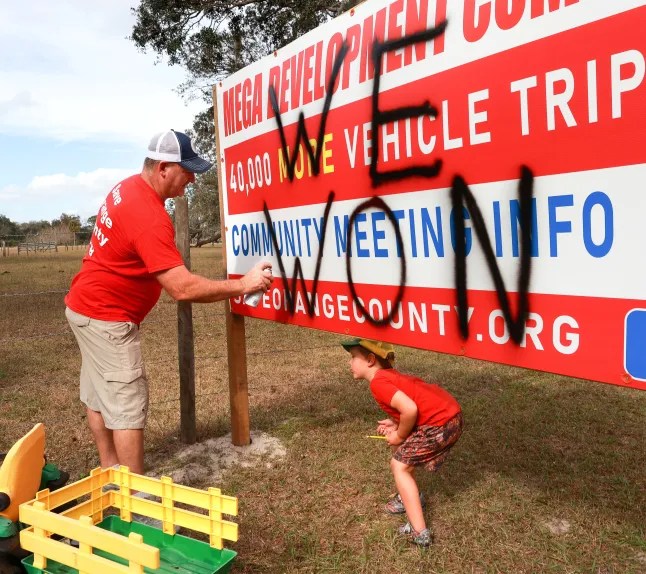
Orlando Sentinel: Sustanee developers sue to build 1,800-home project in rural east Orange
Persistent developers who lost a fight to change land-use rules to build 1,800 homes on idle ranchlands east of the Econ River have sued to set aside the Orange County commission vote against them.
Lake Pickett North LLC, which had proposed the so-called Sustanee development on the former Rybolt cattle ranch in rural east Orange, filed the action this week asking a judge to order the county to transmit the land-use change for a state review.
A judge has not yet been assigned to the case. County lawyers haven’t yet been served the lawsuit. Commissioners voted 4-3 in January against sending the plan to Tallahassee, a mandatory step in Florida’s process to make large-scale land-use changes.
The vote capped a marathon board meeting which started at 9 a.m. Jan. 23 and ended after midnight. Filed by lawyers Brent Spain and David Theriaque, the lawsuit alleged Commissioner Emily Bonilla’s final-hour oration against the project “introduced incorrect or incomplete information” that developers were not permitted to rebut.
Bonilla did not immediately reply to a request for comment. The County is not discussing pending litigation, spokesperson Kelly Finkelstein said Friday.
Bleary-eyed opponents cheered the January vote, though some were wary the fight wasn’t yet finished.
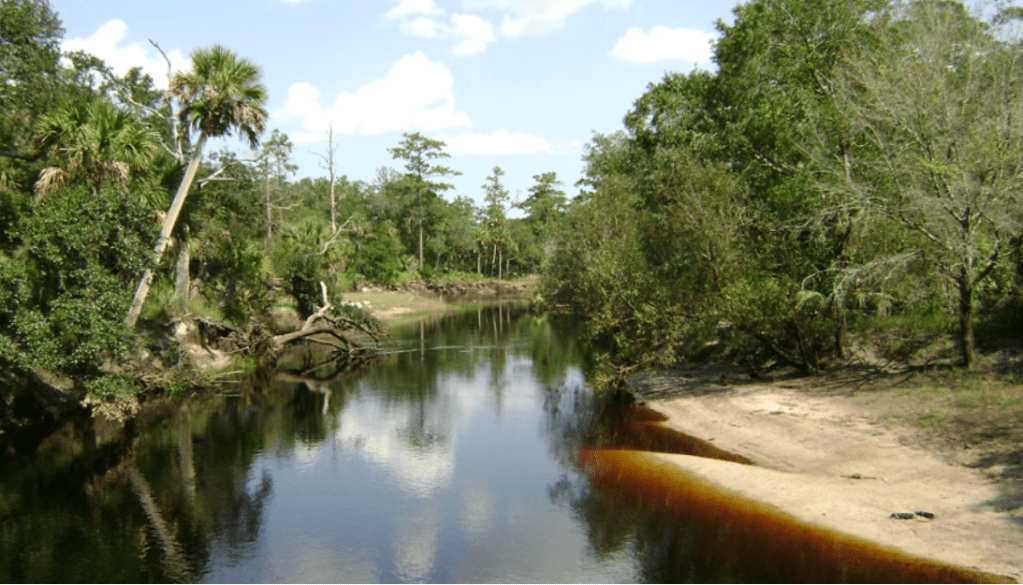
Florida Phoenix: To beat Florida developers, community activists learn to be persistent | Commentary
Kelly advocated for smart development and for the protection of rural land.
“The Econ River, as most locals call it, is a tributary of the St. Johns River. It’s “one of the last unspoiled rivers in Central Florida,” according to the canoe-and-kayak-crazy folks at Paddle Florida. The name means “river of mounds” referring to the numerous Native American burial mounds built along its banks. That should tell you a lot about how pristine it is.”
“We’re passionate,” she said of the friends she’s made among her neighbors. “We’re relentless to protect it.”
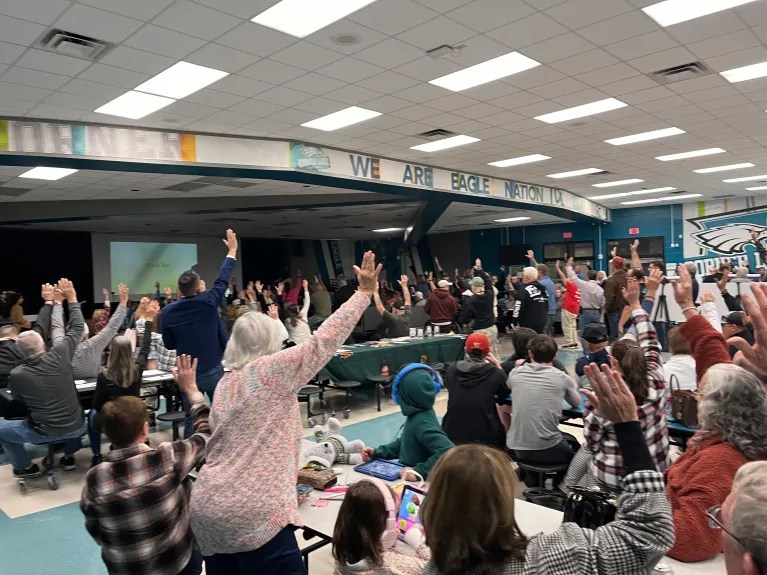
Orlando Sentinel: Builders pushing mega-development in east Orange are back again
Familiar foes find themselves in a fracas again over a proposed mega-development in rural east Orange as residents hope to block a plan for 1,800 homes on ranchlands in the environmentally sensitive Econ River Basin.
Developer Sean Froelich’s proposed project also has a familiar sounding name, Sustanee, a spelling tweak of “Sustany,” the tag by which an earlier iteration of the plan was known in 2016 when it last fired up neighbors’ rancor. In rapidly-growing Central Florida, you can slow a development like this one, but given the economic stakes, it’s next to impossible to kill it.
“It’s like Groundhog Day,” east Orange homeowner Jessup Daniel, 32, said, referring to the 1993 movie about a TV weatherman forced to live an unpleasant experience over and over and over. “It never ends. These guys never quit.”
Neither do the project’s opponents. More than 200 of them, some wearing the same red “Stop Urban Sprawl” t-shirts they wore to fight Sustanee eight years ago, packed the Corner Lake Middle School cafeteria Thursday for a community meeting and lambasted the project.
“It’s the wrong development in the wrong location,” Sustanee foe Kelly Semrad said to hearty applause.
Political ad paid for & approved by the Kelly Semrad Campaign.
Vote4KellySemrad@gmail.com | (407) 233-5375 | 16877 East Colonial Dr. #180 Orlando 32820
 Vote Kelly Semrad for Orange County District 5 Commissioner